4th June, 2026
10 Manual Handling Questions And Answers Explained
In this blog post, we will put your manual handling knowledge to the test with a quick quiz. There are 10 manual handling questions, and the answers are revealed at the end. If you want to test your team, you can download a free PDF.

How much do you know about manual handling at work? Do you know how to lift, carry, and move items safely?
Manual handling is the movement of loads by hand or by bodily force. That includes lifting, carrying, moving, lowering, putting down, pushing or pulling an item.
Pretty much every job involves some kind of manual handling.
Manual handling safety training is important because it is the leading cause of musculoskeletal disorders at work, which accounts for over a third of all work-related illnesses.
Want to find out if you know how to lift and carry safely?
You can start with these 10 quick manual handling health and safety questions.
Don't worry if you are not sure about the answers - we explain them below to help prepare you for your manual handling course.
Here's a video to give you an introduction to the questions, or a quick recap if it's been a while since you last refreshed the key manual handling areas.
💡 If you think your manual handling knowledge is pretty good, or prefer text over video, skip the video and dive right into the questions below!
🤔 Try to answer the question yourself before looking at the answer and see how many you can get right!
📄 Want to print question sheets to test your team? Download the free manual handling quiz PDF, which includes an answer sheet for marking.
Ok, let's get started.
1. Which of the following is not a manual handling activity?
A. Picking up a box
B. Putting down a box
C. Walking towards a box
D. Carrying a box
scroll down for the answer:
👇
👇
👇
✅ Answer: C. Walking towards a box.
Manual handling includes lifting, carrying, moving, lowering, putting down, pushing or pulling. If you are walking towards the box, you are not manual handling (yet).
Find out more in what is manual handling?
2. What does TILE stand for in manual handling?
TILE is a health and safety acronym often used in manual handling. Can you remember what the letters mean?
scroll down for the answer:
👇
👇
👇
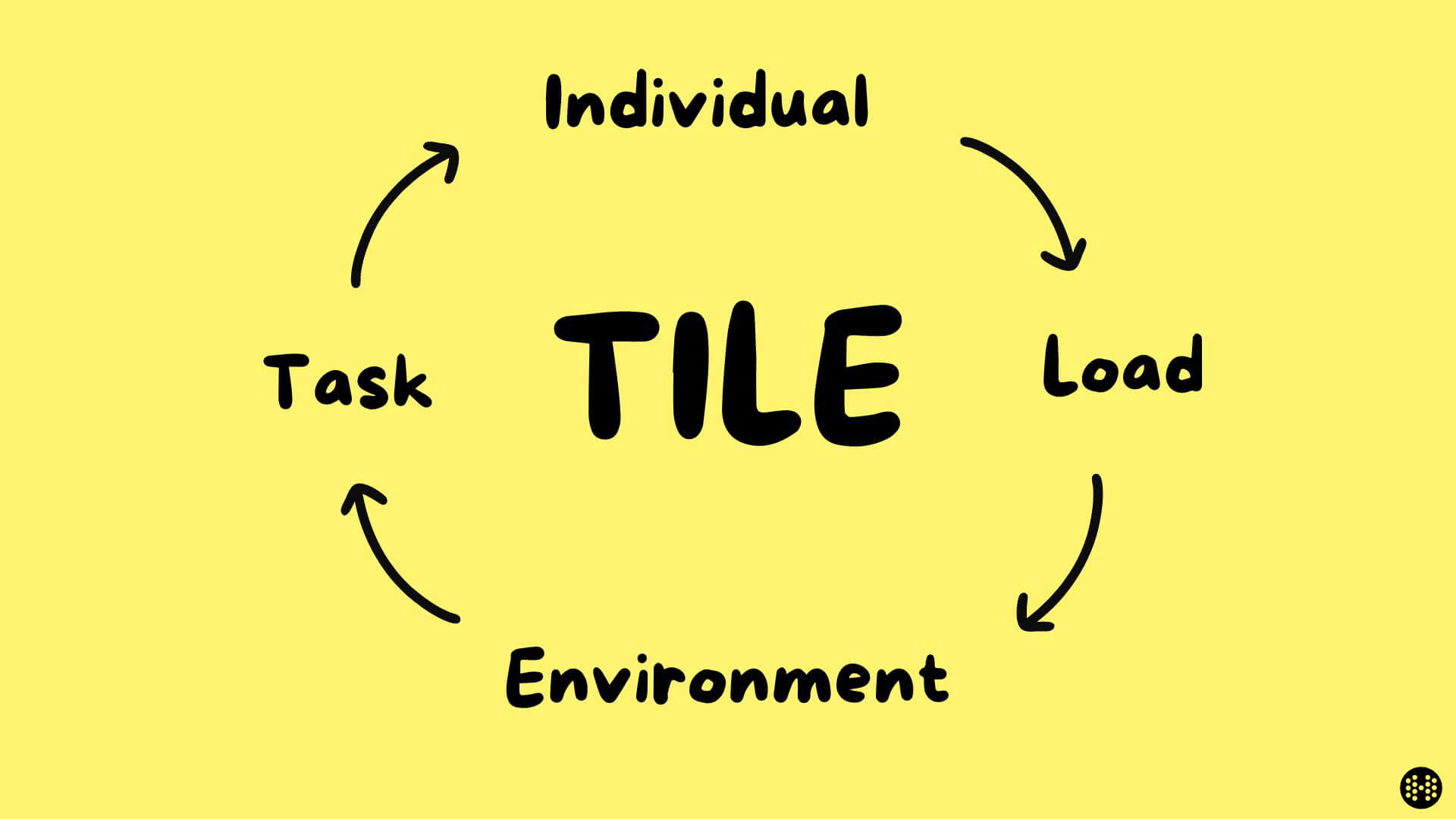
✅ Answer: Task, Individual, Load, Environment.
Task, Individual, Load, and Environment are the four key areas you need to assess when manual handling.
Find out more in what is TILE?
3. You should avoid manual handling wherever possible?
Is this statement true or false?
scroll down for the answer:
👇
👇
👇
✅ Answer: True.
Yes, if you can avoid manual handling, you won't be exposed to the risks involved with manual handling. Are there other ways items can be moved? Can they be moved by machine, or delivered where they are needed?
4. You should always look _______ when manual handling.
A. At the load
B. Down
C. Behind
D. Ahead
scroll down for the answer:
👇
👇
👇
✅ Answer: D. Ahead.

You should be looking ahead to see where you are going when you are manual handling. If you are looking at the load, or you can't see ahead, you are less likely to see any hazards that might be in front of you.
5. What is the best way to reduce the risks from manual handling?
A. Manage
B. Eliminate
C. Team lifting
D. Mechanisation
scroll down for the answer:
👇
👇
👇
✅ Answer: B. Eliminate.
The best health and safety control measure is elimination. If you can remove the need for manual handling, you remove the risk associated with manual handling.
Find out more about the hierarchy of risk control.
6. Manual handling is always safe if a load is under 25kg?
As long as boxes and packages are under 25kg, they are safe for one person to lift, true or false?
scroll down for the answer:
👇
👇
👇
✅ Answer: False.
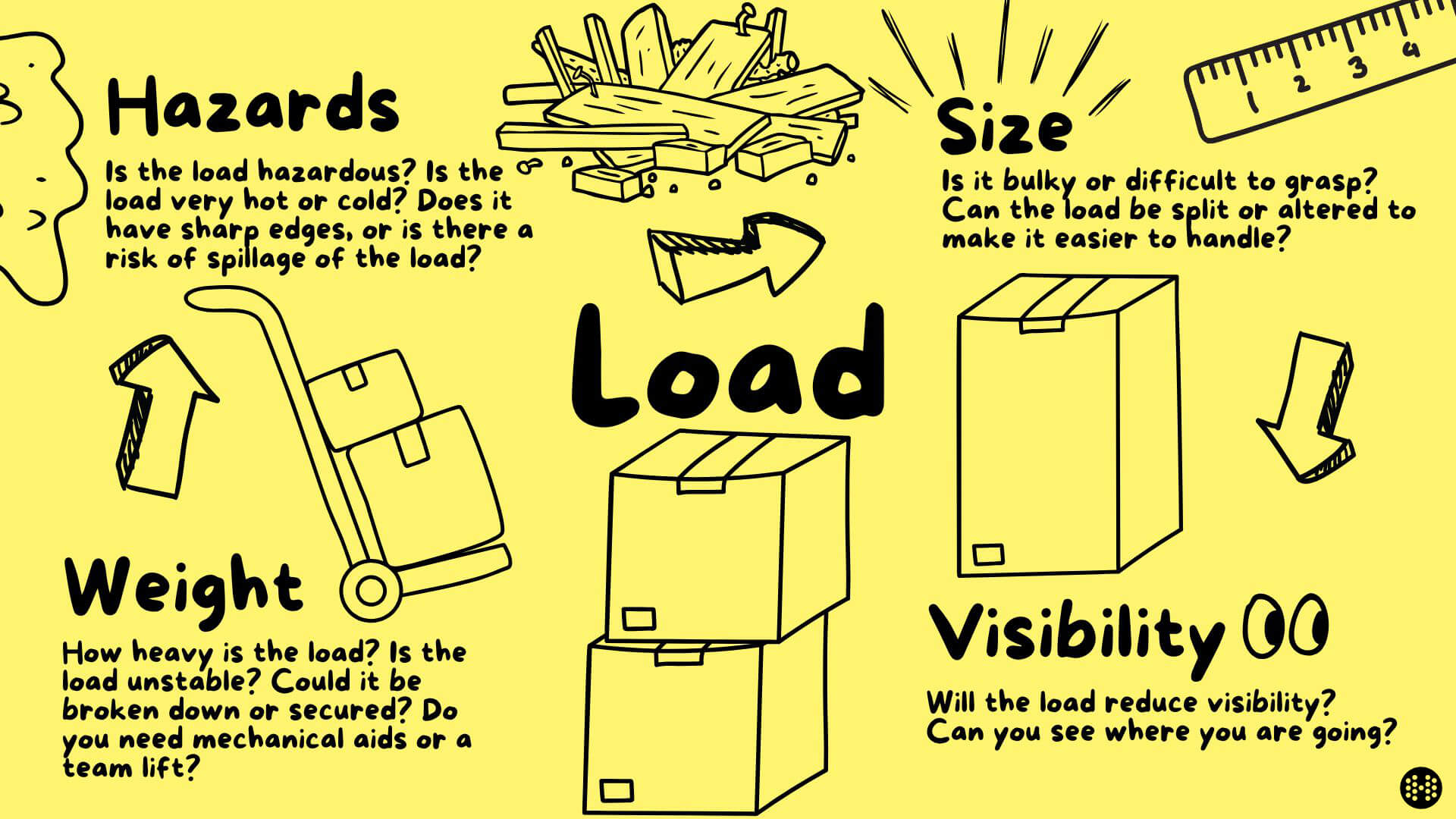
This might surprise you, but there is no safe lifting weight or maximum lifting weight for manual handling. A load can be hazardous even if it is under 25kg; for example, it might be hot, sharp, or unstable. And people can have different strengths; what is easy for one person to carry might be too heavy for another.
Find out more in manual handling and the maximum weight you can lift.
7. What should you not do when manual handling?
A. Stoop
B. Flex your hips
C. Bend your knees
D. Stand with your feet apart
scroll down for the answer:
👇
👇
👇
✅ Answer: A. Stoop.
When lifting and carrying, if you bend forward or stoop over, you put extra strain on your back, and back injuries are the most common kind of manual handling injuries.
Keep your back straight and correct your manual handling technique.
8. At what height should you carry a load when manual handling?
A. Knee height
B. Waist height
C. Chest height
D. Neck height
scroll down for the answer:
👇
👇
👇
✅ Answer: B. Waist height.
When you are manual handling, use good manual handling techniques and carry loads at waist height. If you carry loads above waist height, you increase the strain on your arms. If you carry loads lower, then you risk stooping and injuring your back.
9. Is manual handling responsible for over a third of all workplace injuries?
True or false?
scroll down for the answer:
👇
👇
👇
✅ Answer: True.
Yes, it's true. Manual handling might sound simple enough, and we might all lift and carry things every day, but thousands of workers get injured doing it. It's actually number 3 in our top 5 health risks at work!

Musculoskeletal disorders affect hundreds of thousands of UK workers. The biggest contributor? Manual handling.
Find out more about the different types of manual handling injuries and what causes them.
10. What is the main health and safety regulation for manual handling?
A. The health and safety at work etc. act
B. The management of health and safety at work regulations
C. The manual handling operations regulations
D. The lifting and carrying regulations
scroll down for the answer:
👇
👇
👇
✅ Answer: C. The manual handling operations regulations.
Yes, manual handling is such an important health and safety issue that it has its own set of health and safety regulations. The Manual Handling Operations Regulations cover the legal requirements of manual handling at work. Employers' duties include avoiding the need for manual handling wherever possible, assessing the risk, reducing the need by providing mechanical aids, and training staff in good manual handling techniques.
You should make full and proper use of anything provided by your employer in connection with manual handling. This includes following any advice and training given on lifting and carrying.
How did you do? Did you manage to answer all 10 questions correctly without looking at the answers? Download the free manual handling toolbox talk to keep your knowledge fresh.


This article was written by Emma at HASpod. Emma has over 10 years experience in health and safety and BSc (Hons) Construction Management. She is NEBOSH qualified and Tech IOSH.
Can you handle this?
Take our manual handling elearning course and get your certificate today.
Course InfoRecent posts like this...
10 Manual Handling Questions And Answers Explained
In this blog post, we will put your manual handling knowledge to the test with a quick quiz. There are 10 manual handling questions, and the answers are revealed at the end. If you want to test your team, you can download a free PDF.
Read Post What Is Manual Handling?
Manual handling happens when you use your hands or your body to move or support a load. In this blog post, we will look at manual handling at work, manual handling activities, the legal requirements, and how to carry out manual handling safely.
Read Post
How To Correct Your Manual Handling Technique
Manual handling is simple, right? Lifting and carrying are things we do all the time, so how can it go wrong? Since manual handling injuries account for around a third of workplace injuries, maybe it's not as simple as it sounds! Here are nine simple ways to correct your manual handling technique.
Read Post