4th November, 2026
10 Health And Safety Superpowers Every Workplace Needs
Every workplace has hazards. The trick is having the right superpowers to spot them, manage the risk, and keep people safe. You don't need a cape to be a health and safety superhero. Here are the 10 superpowers you do need.
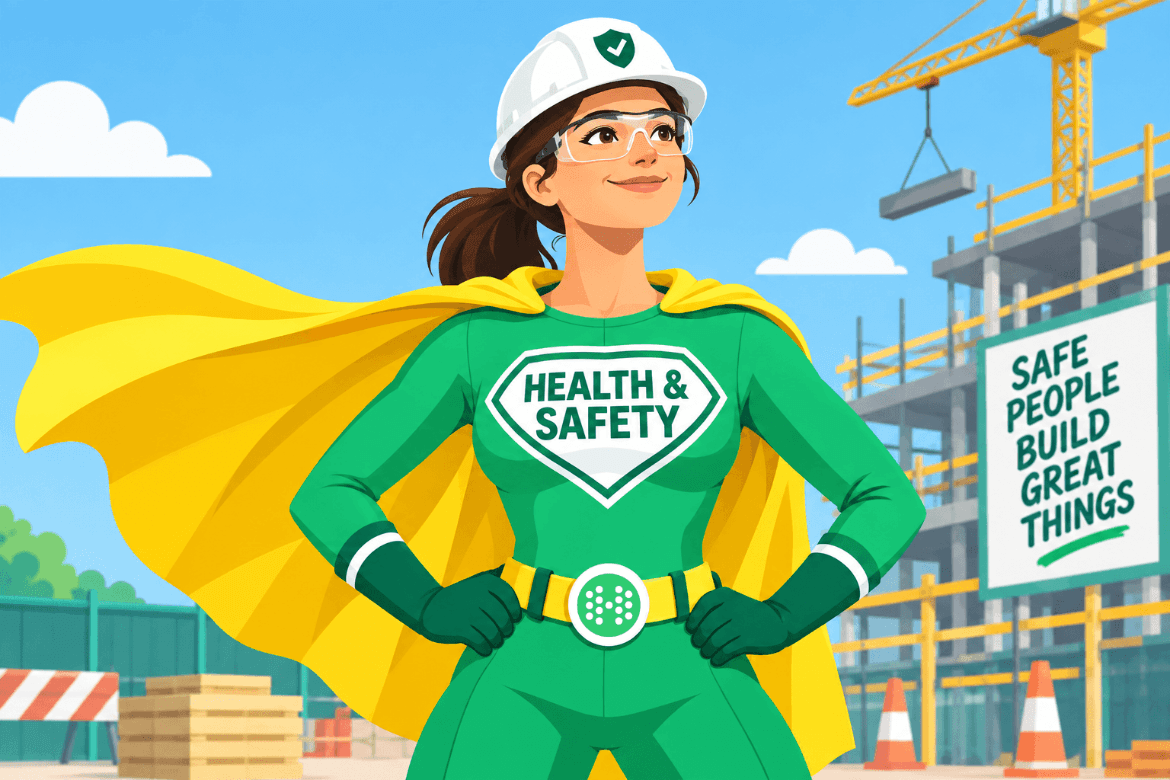
Health and safety can sometimes feel like a lot of paperwork, policies and endless boxes to tick. But that's not what health and safety is. At its heart, it's about something much more important: spotting problems, preventing harm, and helping everyone get home safely.
You might not have X-ray vision or the ability to travel through time, but with the right approach, your workplace can have some pretty impressive health and safety skills.
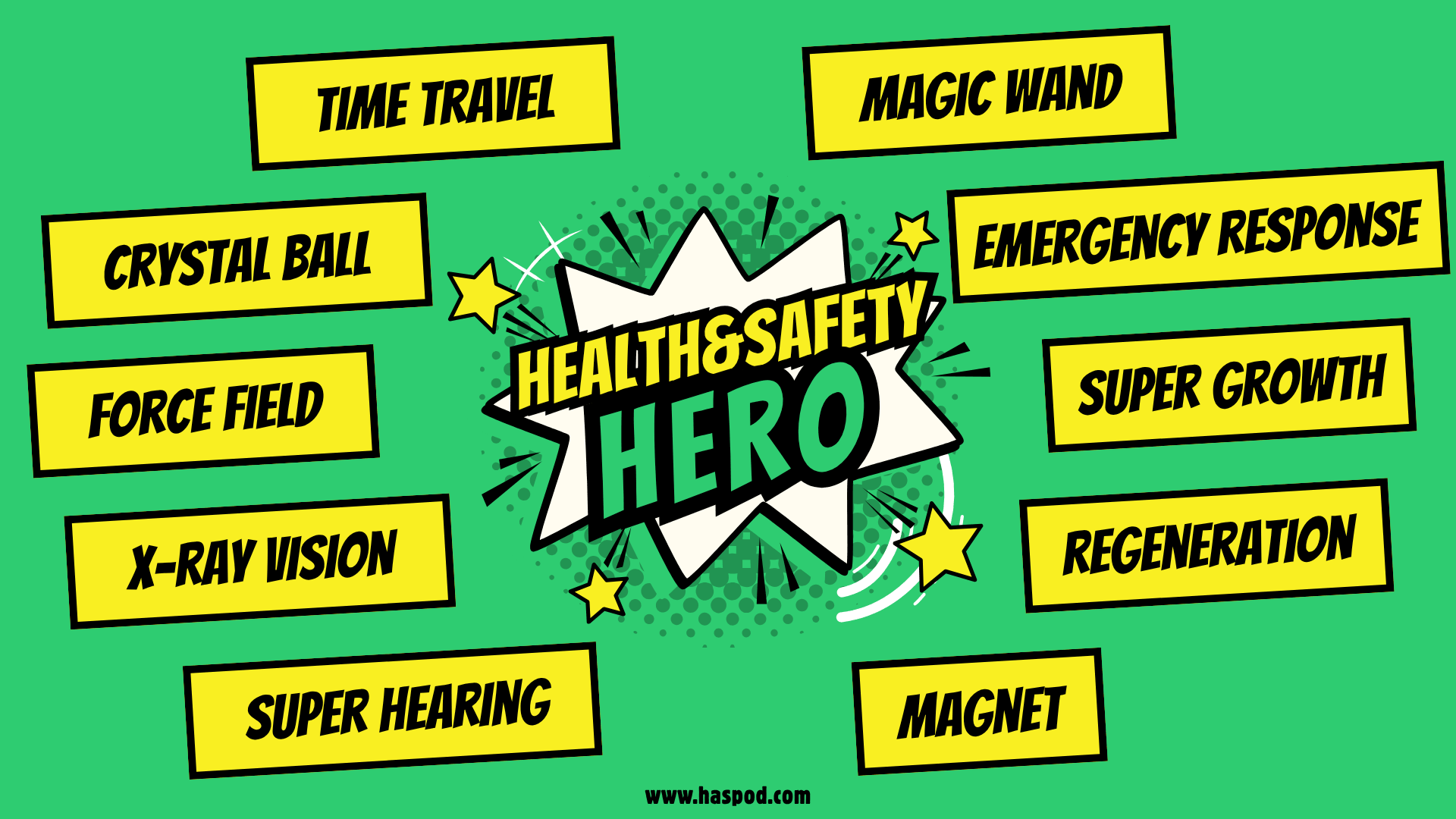
They might sound snazzy, but these superpowers are just practical habits or controls that help businesses stay on top of workplace health and safety. Simple things, you know, like seeing the future, which anyone can learn! Don't worry, we'll explain how.
In this blog post, we will explore 10 health and safety superpowers you'll need to create a safe workplace, and how to develop them.
1. Time Travel Superpower
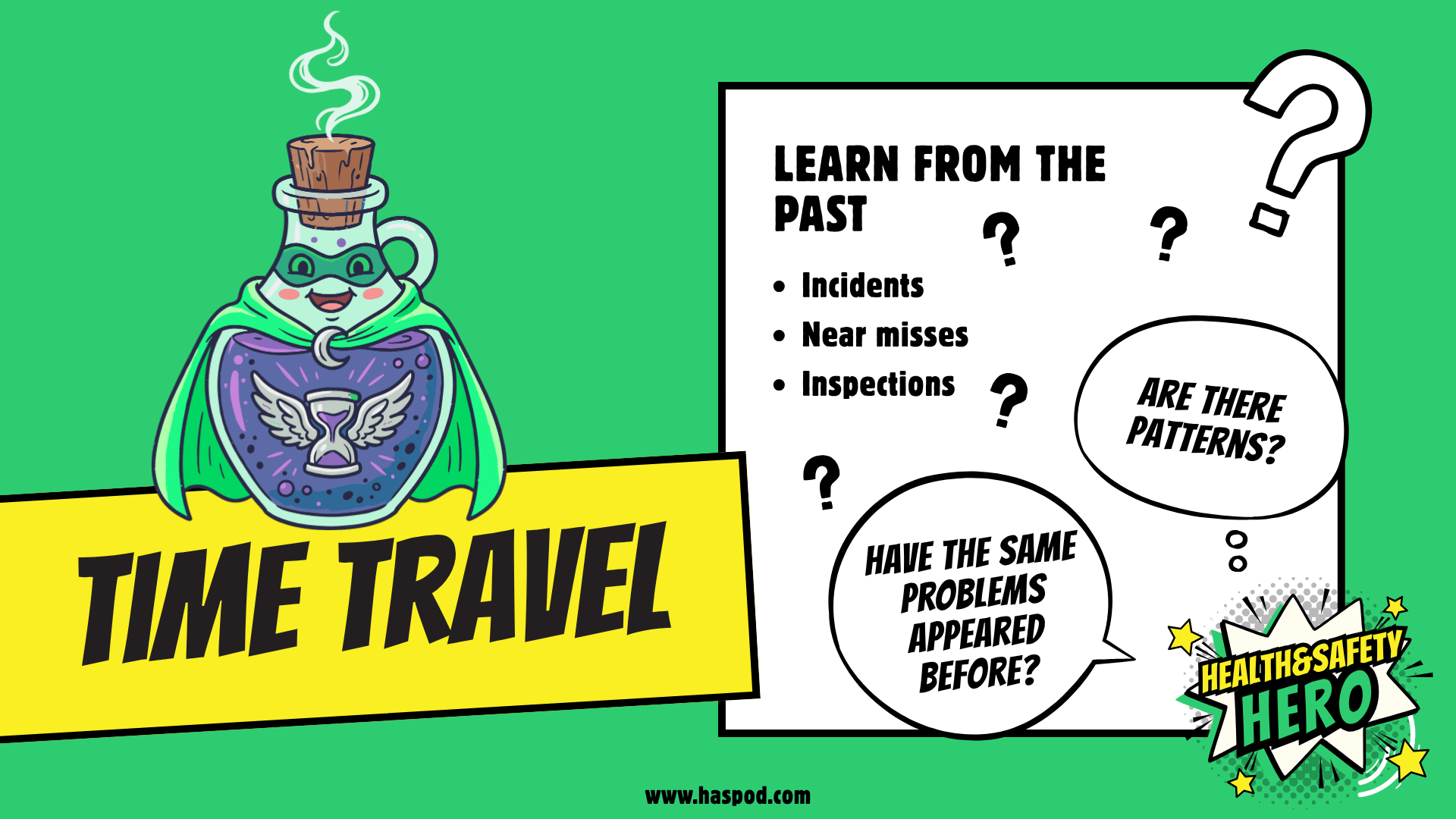
Learn from the past and avoid repeating mistakes.
The past can give us clues about what might happen next.
You can't go back in time, but you can use this superpower to learn from it. Look at previous incidents and accidents. Are there patterns? Have the same problems appeared before?
You can learn from:
- Accidents
- Near misses
- Inspections
- Reviews
- Employee feedback
Investigate what happened, identify the causes, make improvements, and share the lessons. Even superheroes get better with practice. Your health and safety arrangements should too.
🦸 Superpower check: When did you last review an accident or near miss in your workplace? What lessons did you learn?
2. Crystal Ball Superpower
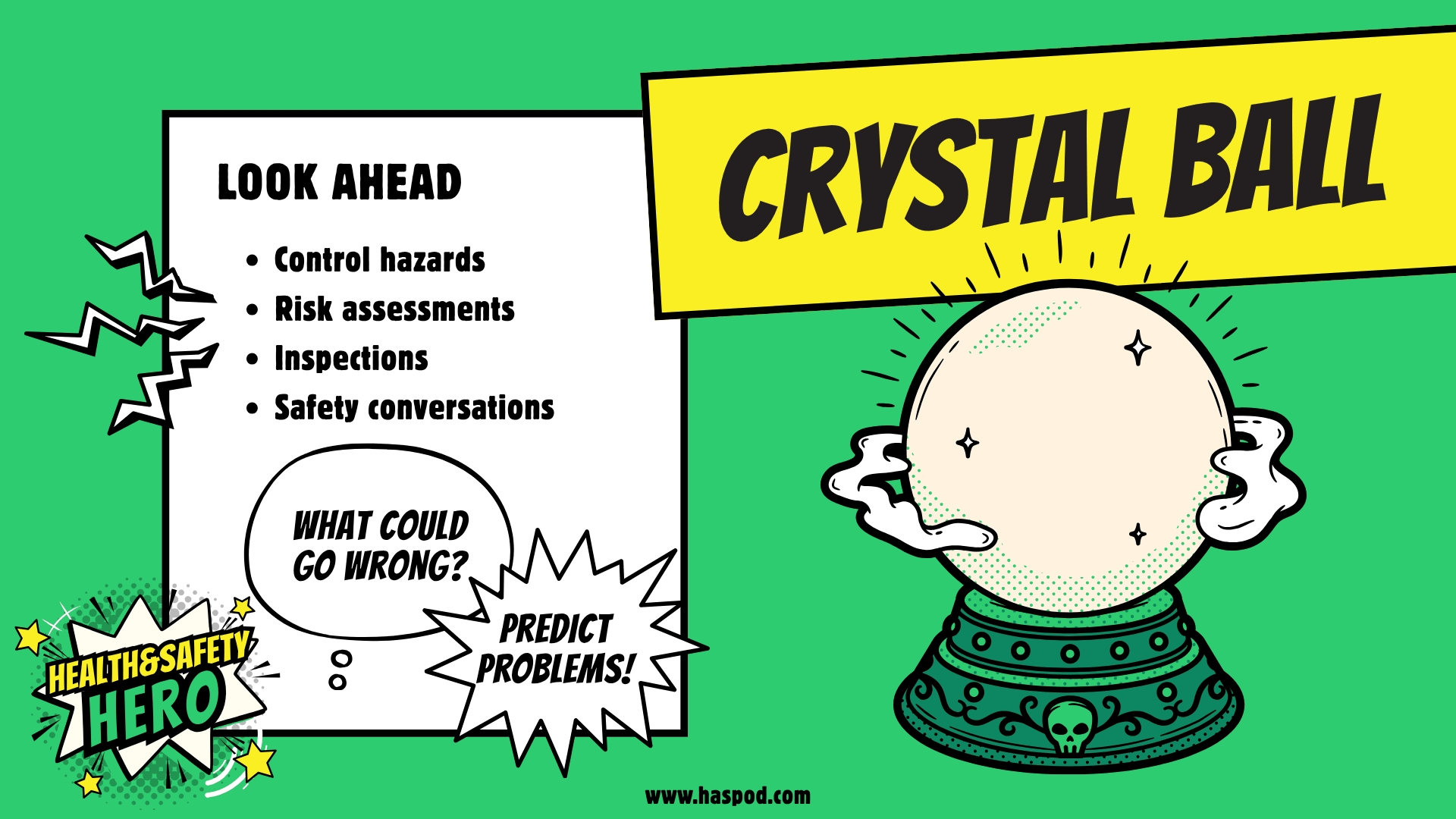
Look ahead and spot what could go wrong before it happens.
Don't wait for something to go wrong before taking action. One of the most important skills you can have in health and safety is to spot hazards (and deal with them) before someone gets hurt.
Risk assessments, inspections, and safety conversations can help you identify hazards before they become incidents.
You don't need a crystal ball to predict every possible accident — but thinking ahead can help you prevent many foreseeable risks. And that doesn't mean you need to see the future. It means that you proactively identify hazards, rather than waiting for an accident to highlight them.
You'll need this superpower if you follow the 5 steps to risk assessment. Identify the hazards and then look to the future to think about who could be harmed by those hazards, and how.
- What could cause harm?
- Who could be affected?
- How serious could the consequences be?
- What controls are already in place?
- What else could reasonably be done?
Risk assessment isn't about predicting the future perfectly; it's about taking sensible steps to control risks.
🦸 Superpower check: When was the last time your workplace actively looked for hazards rather than waiting for someone to report one?
Get help with our free risk assessment calculator, or access risk assessment templates for hundreds of activities ready to use in your business.
3. Force Field Superpower
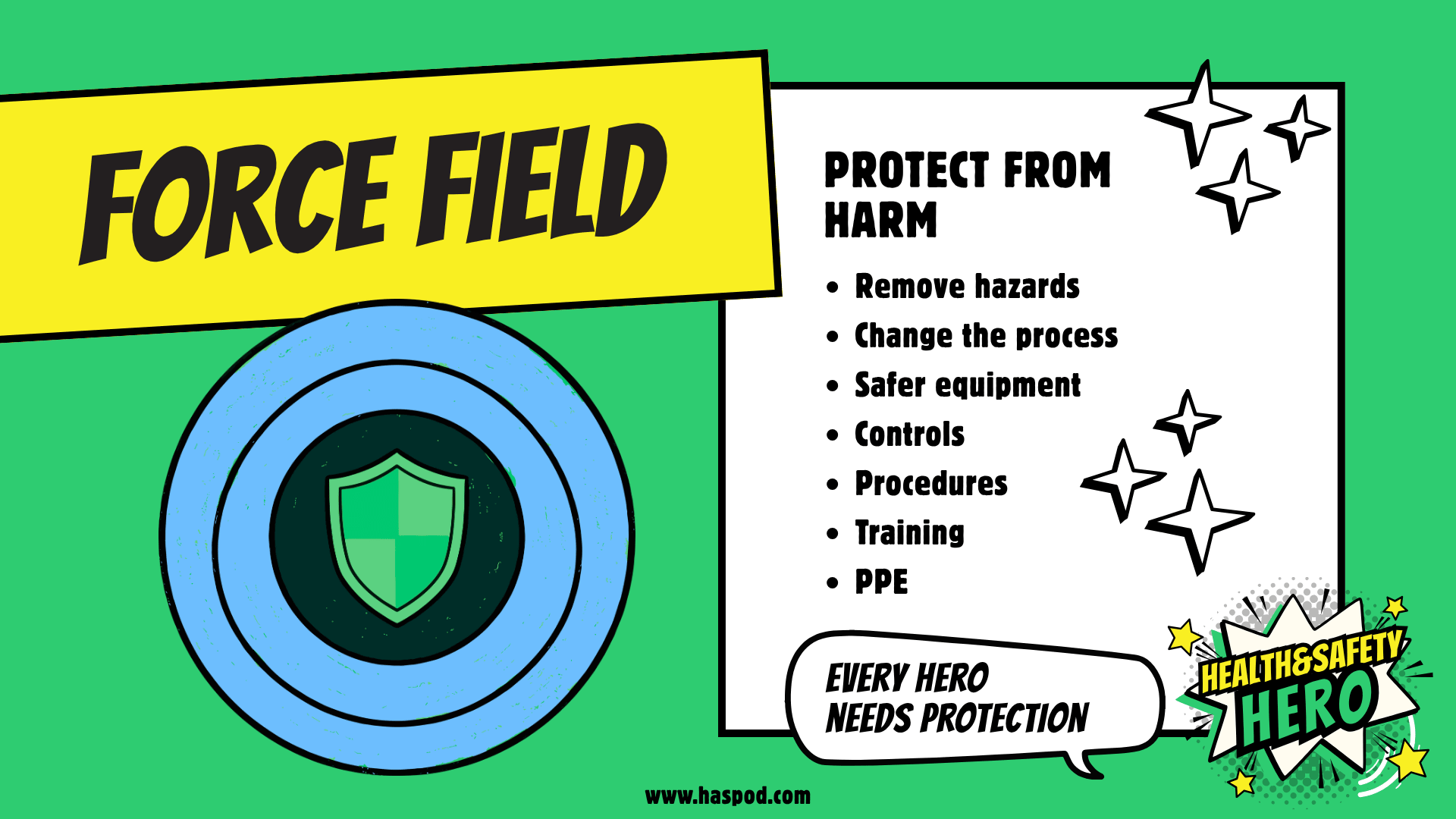
Putting effective controls between people and hazards.
This superpower is great for preventing harm.
Once you've identified a hazard, the next superpower is protecting people from it. And in health and safety, you'll use control measures to create your force fields.
Examples include:
- Removing the hazard
- Changing the process
- Providing safer equipment
- Engineering controls
- Procedures and systems of work
- Training
- PPE where appropriate
🦸 Superpower check: Do you know about and use the hierarchy of risk control?
4. X-Ray Vision
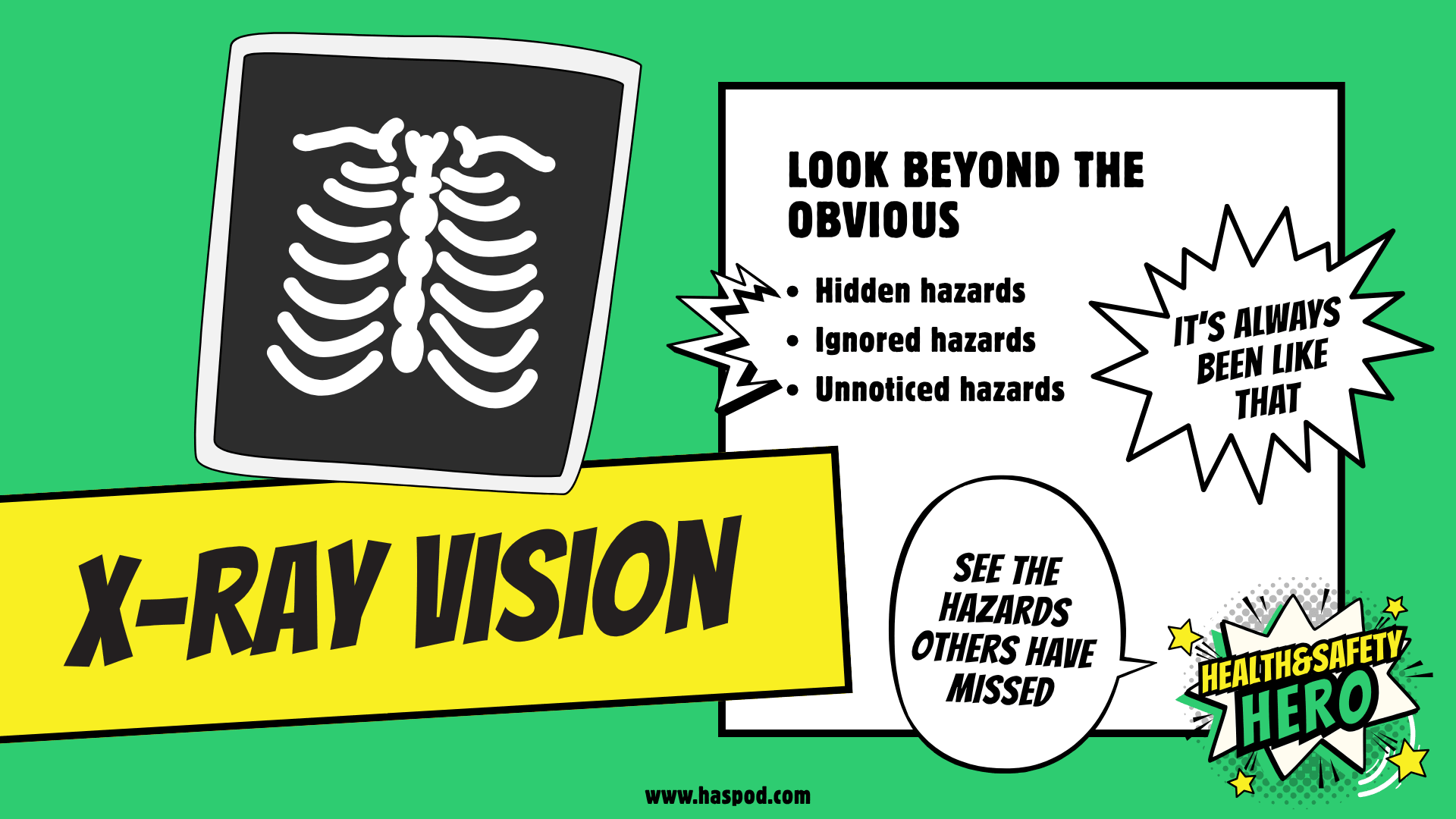
Seeing the hazards everyone else has stopped noticing.
Use this superpower to look again at your workplace. Are there hidden hazards? Are hazards being ignored?
Walking past a hazard 100 times doesn't mean it's stopped being a hazard. It just means no one has hurt themselves yet. People can become so used to their surroundings that they stop noticing things. And some of those things could hurt them.
As a health and safety hero, you need to turn your X-ray vision on and notice the hazards hiding in plain sight.
Examples:
- "That cable's always been there."
- "That flooring has always been loose."
- "Everyone knows that cupboard doesn't close properly."
- "We've always stored it there."
🦸 Superpower check: Do you spot things that others don't? Do you pick up on problems other people have ignored?
Use the free health and safety audit checklist to see how your workplace scores and identify areas that may need attention.
5. Super Hearing
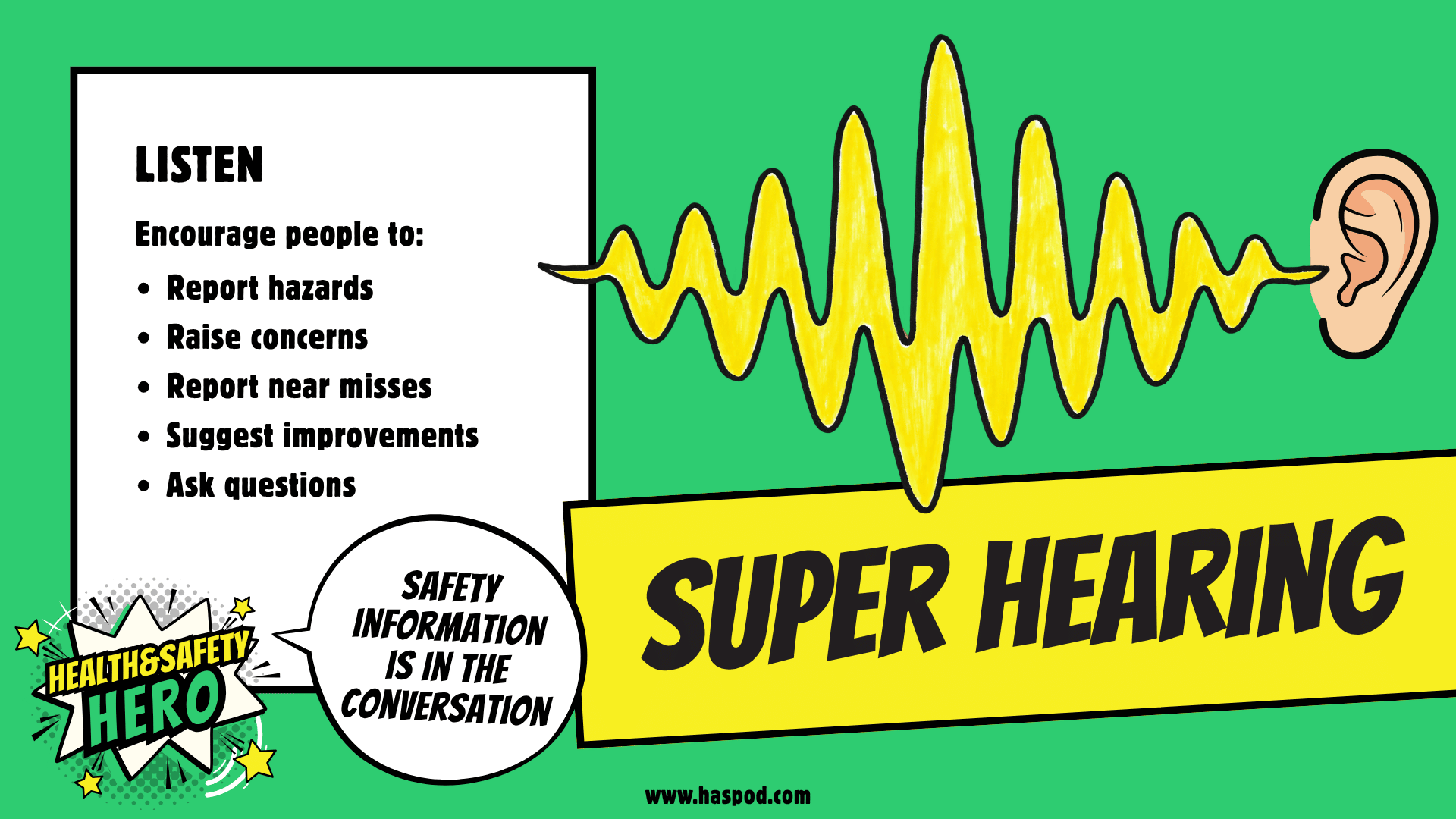
Listening when employees speak up about health and safety.
A strong safety culture isn't just about telling people what to do. It's also about listening.
To use this superpower, you need to create a workplace where people feel able to raise concerns.
Employees are often the people closest to the work. They are doing the job, exposed to the risks, and using the controls, and they may notice risks that aren't obvious to managers.
Develop this superpower by encouraging people to:
- Report hazards
- Raise concerns
- Report near misses
- Suggest improvements
- Ask questions
- Share lessons from incidents
🦸 Superpower check: Do you come up with all the rules and procedures, or do you allow input from your team?
6. Magic Wand Superpower
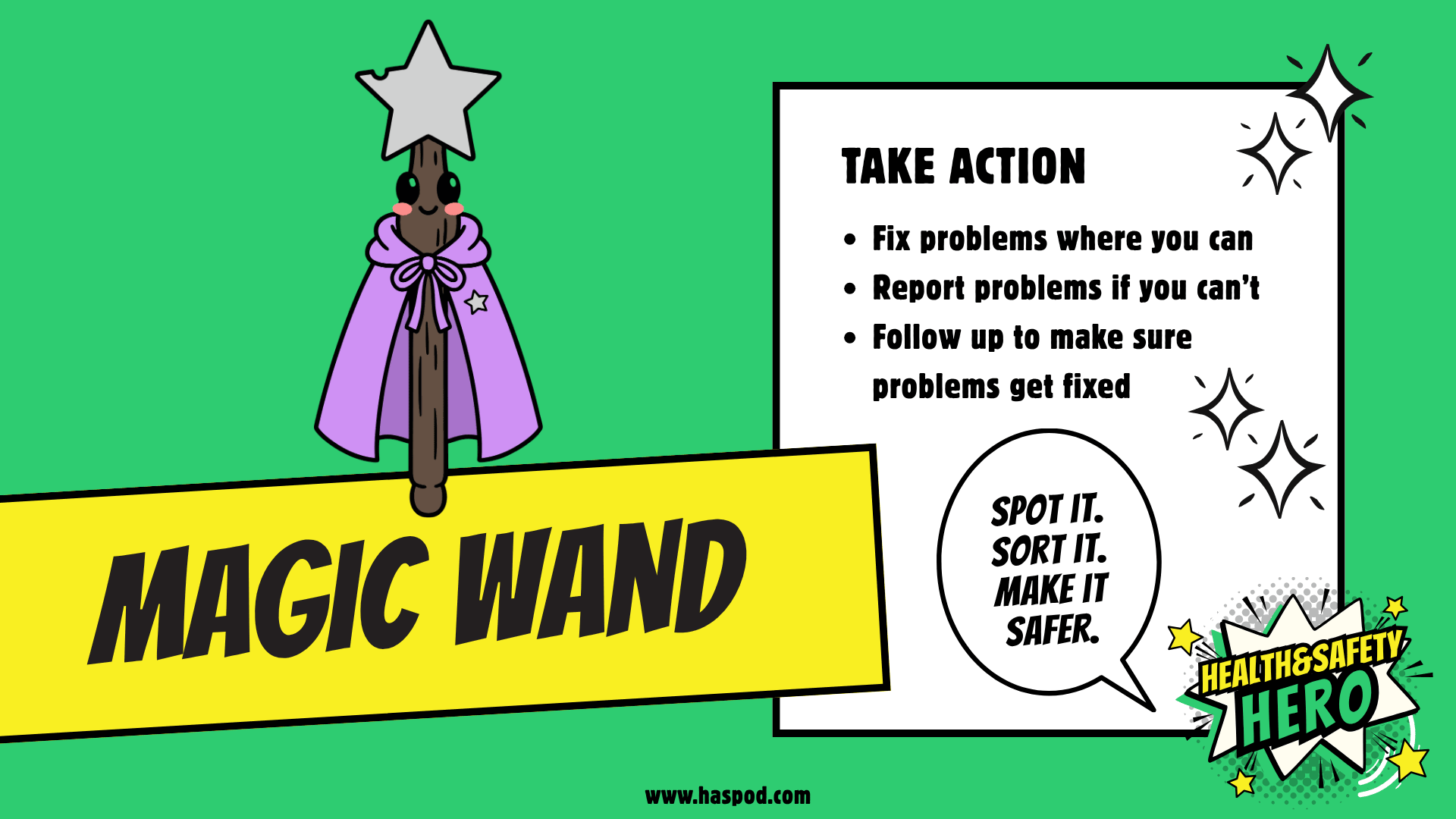
Turning observations into improvements.
This superpower isn't about magically making problems disappear. It's about taking action.
If you spot something unsafe, you won't just point it out; you'll do something about it.
Examples:
- Fixing problems where you can
- Reporting problems to the person who can fix them
- Following up to make sure problems have been fixed
🦸 Superpower check: When was the last time you waved your magic wand and turned something in your workplace from unsafe to safe?
7. Emergency Response Superpower
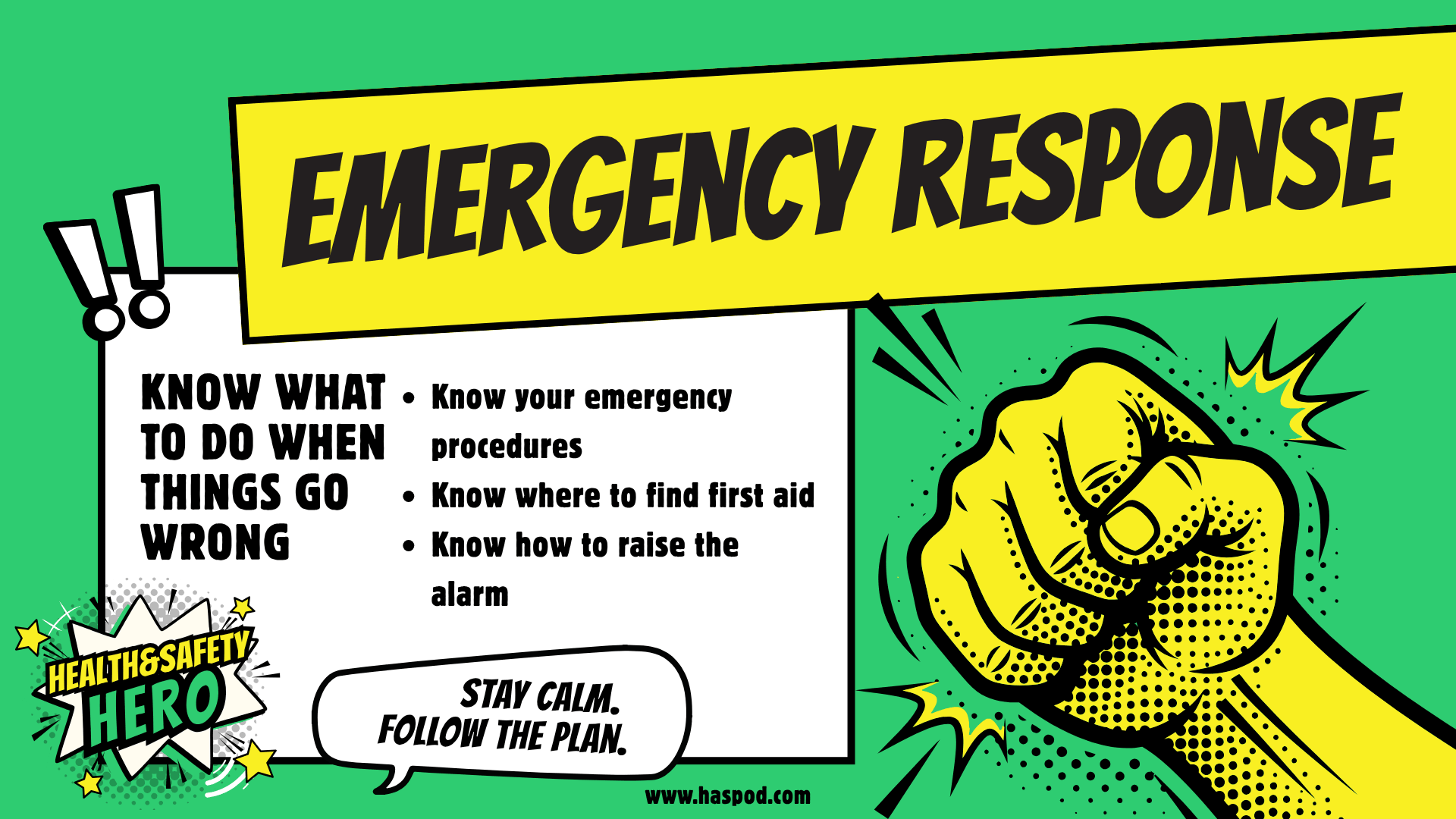
Knowing what to do when things go wrong.
As a health and safety superhero, you need the power to know what to do when things go wrong. Even with good controls, businesses need to be prepared for emergencies.
This superpower is all about being prepared for when something goes wrong.
And that includes appropriate arrangements for things such as:
- Fire
- First aid
- Evacuation
- Serious incidents
- Emergency communication
- Contacting emergency services
You don't practise an emergency procedure because you expect something to go wrong. You practice because you want everyone to know what to do if it does.
🦸 Superpower check: Do you have emergency plans in place, and does everyone know what they need to do if an emergency happens?
Create an emergency evacuation procedure for your workplace so that everyone can get to safety.
8. Growth Superpower
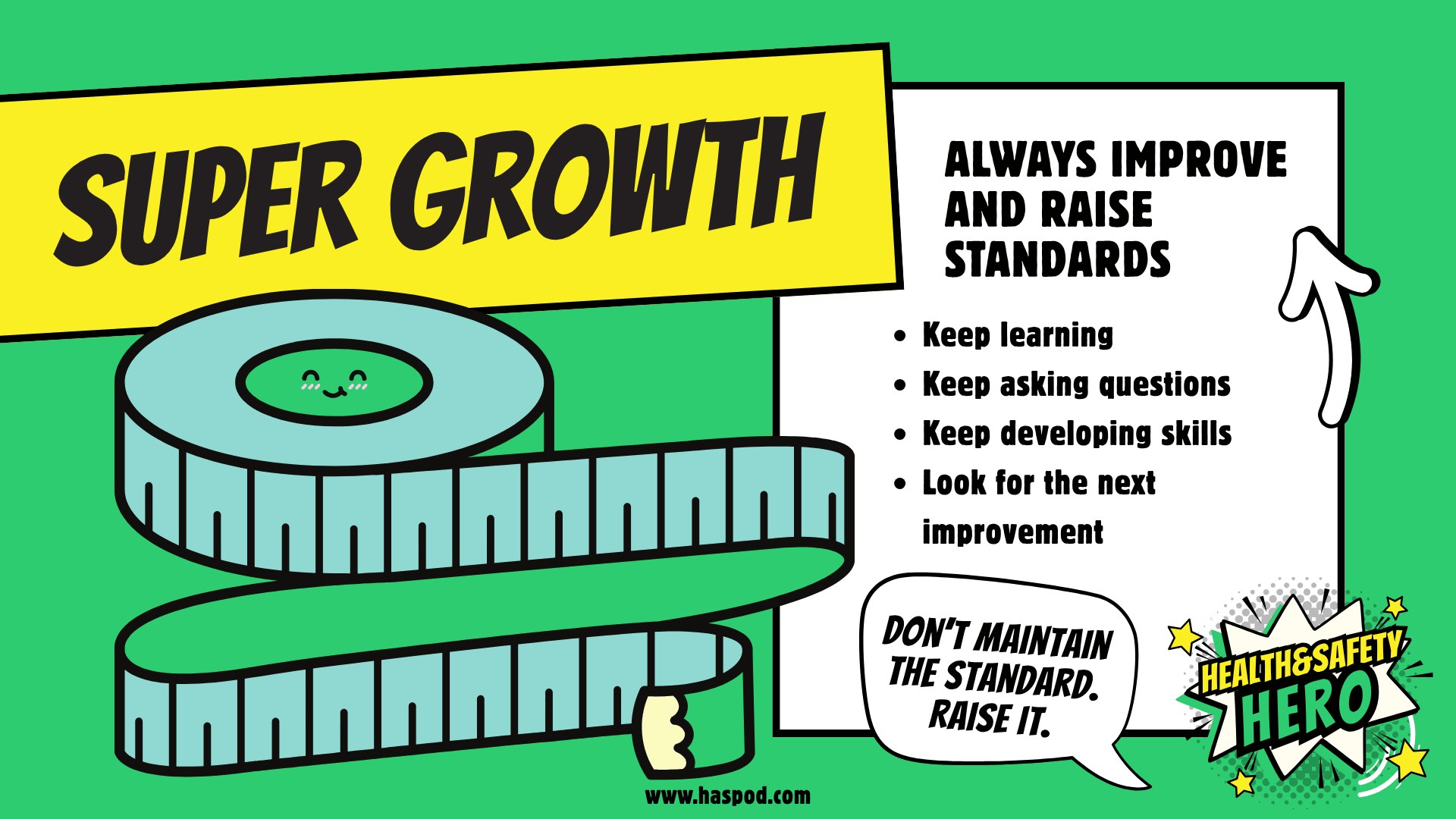
Learning, developing skills, and getting better.
Never settle for "that's how we've always done it." Make things better than they were yesterday. Always look for the next improvement.
To use this superpower, you'll never assume "we're done". You'll always be looking to improve and raise standards.
Examples:
- Improve processes
- Simplify procedures
- Strengthen controls
- Develop skills
- Build knowledge
- Share knowledge
- Raise health and safety standards
Keep learning. Keep asking questions. Keep developing your skills. Every lesson, every conversation, and every experience can make you a better health and safety professional.
Don't just maintain the standard. Raise it.
🦸 Superpower check: When was your last health and safety improvement? This could be a procedure, control measure, or training.
9. Regeneration Superpower
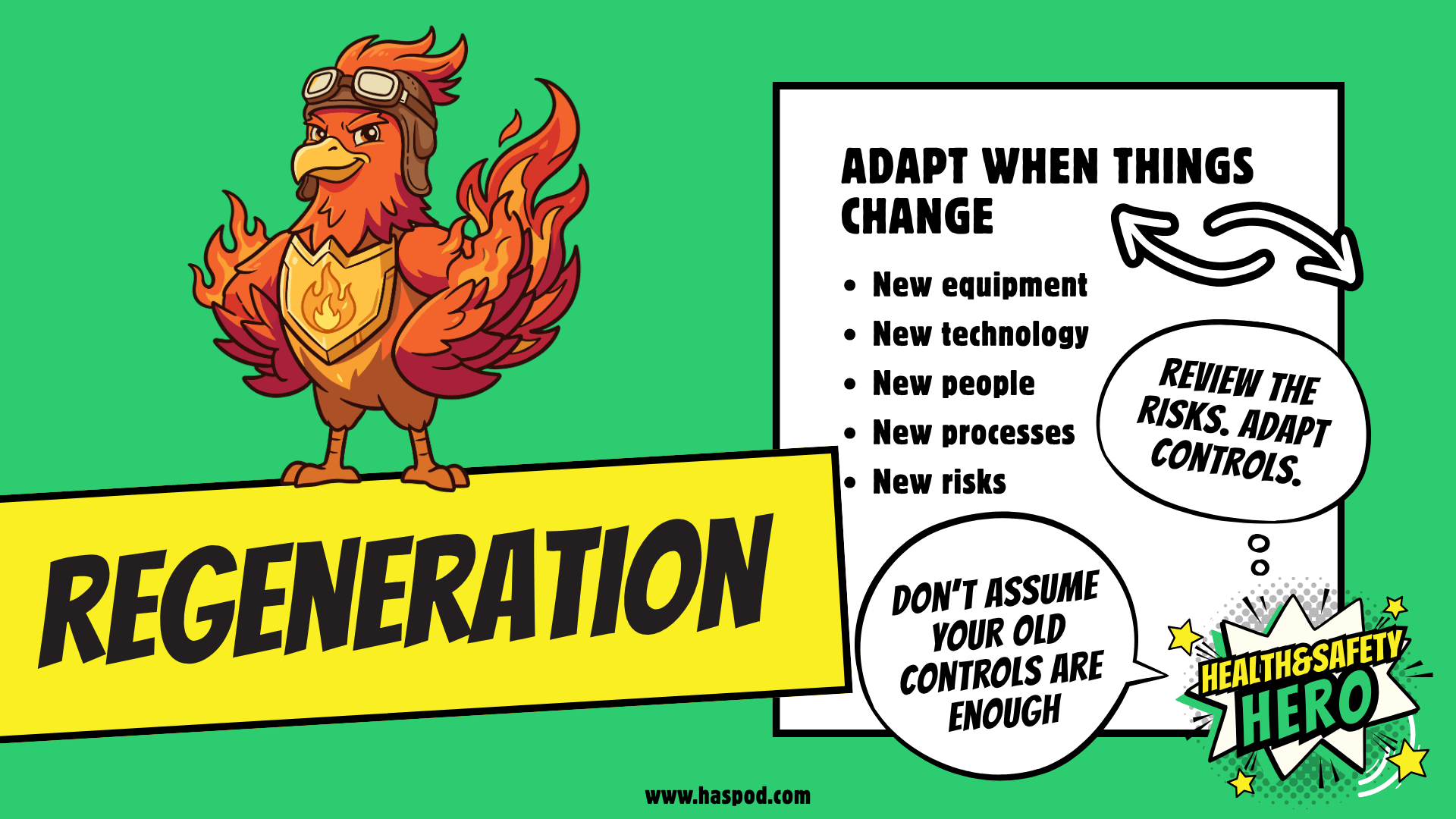
Keeping safety strong and adapting when things change.
Health and safety is an ongoing process.
No workplace stays the same. People change. Equipment changes. Processes change. Premises change. New risks can emerge.
And that means health and safety is never finished. When things change, don't assume your old controls are still enough.
Keep an eye on:
- Changes to working practices
- New equipment
- Reviews and audits
- Regulations
- Processes not working as they should
And if something goes wrong, you can use your regeneration power to act quickly to restore the protection and make sure health and safety systems are working again.
🦸 Superpower check: When was your last health and safety review? Use the free health and safety audit checklist to check your health and safety score.
10. Magnet Superpower
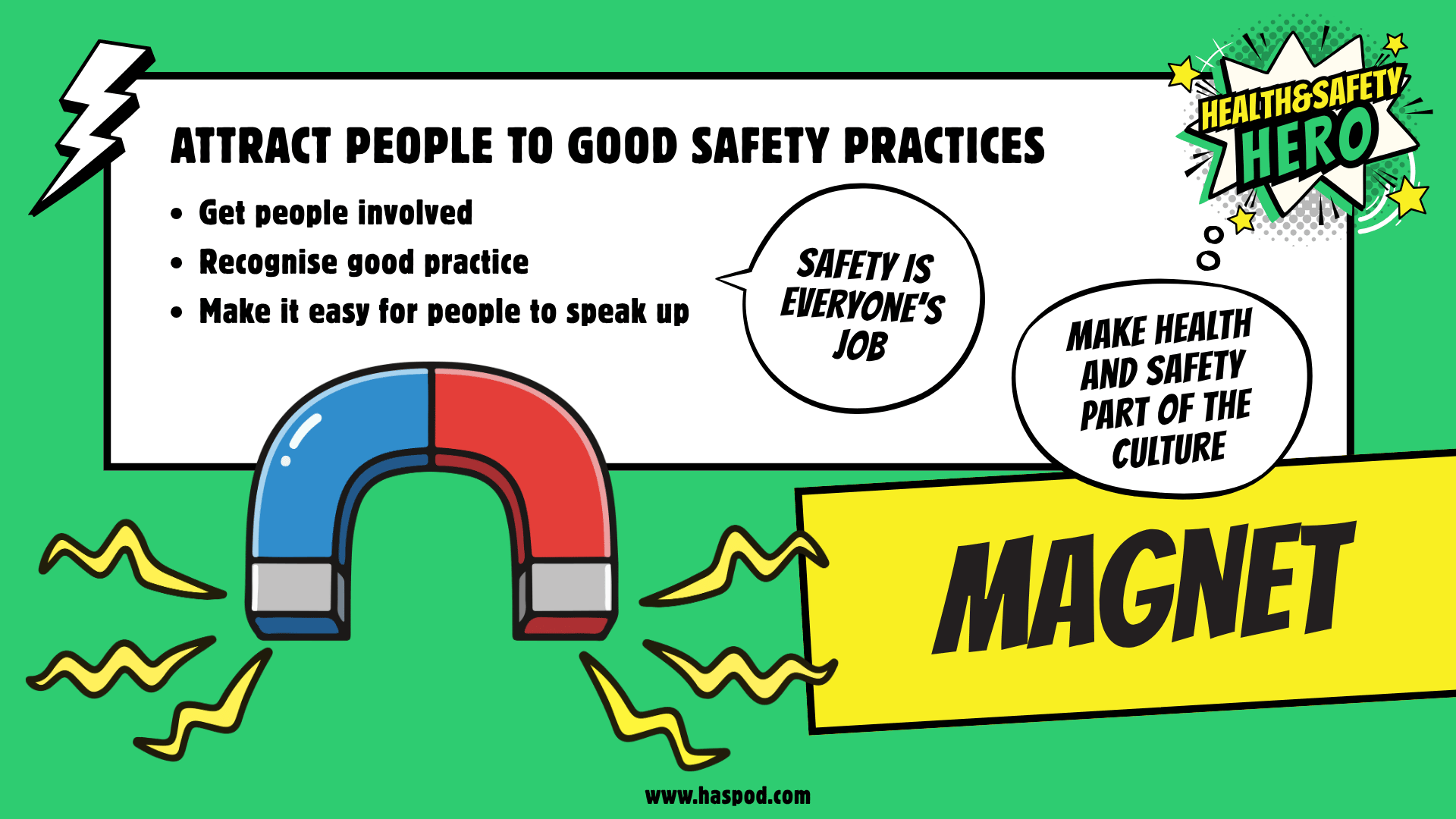
Attracting people to good safety practices and making safety everyone's responsibility.
The ultimate workplace superpower isn't a piece of equipment or a particularly impressive policy. It's growing a positive health and safety culture and having people who actively contribute to keeping themselves and others safe.
You'll use this superpower to bring everyone together.
Health and safety works best when it isn't the responsibility of just one person. It works best when everyone works together.
Examples:
- Employees report hazards
- Managers respond to concerns
- Teams follow safe procedures
- Problems are investigated
- Lessons are shared
- Improvements are made
🦸 Superpower check: Does your team work together to spot hazards and reduce risks, or do you leave it all to one person?
Want to put your workplace's superpowers to the test? Use our free health and safety audit checklist to work through the key areas of workplace safety and identify anything that may need further attention.


This article was written by Emma at HASpod. Emma has over 10 years experience in health and safety and BSc (Hons) Construction Management. She is NEBOSH qualified and Tech IOSH.
Better health and safety...
We are here to help you and your business put safety in everything.
Learn MoreRecent posts like this...
10 Health And Safety Superpowers Every Workplace Needs
Every workplace has hazards. The trick is having the right superpowers to spot them, manage the risk, and keep people safe. You don't need a cape to be a health and safety superhero. Here are the 10 superpowers you do need.
Read Post
Most Dangerous Jobs In The UK: 10 High-Risk Jobs And Industries
Some jobs carry greater risks of fatal or serious injury than others. In this guide, we look at ten high-risk occupations, trades and industries, the hazards workers may face, and why managing health and safety is so important.
Read Post
10 Reasons Why You Can Achieve Zero Harm
Zero harm can never be achieved at work. It is unrealistic, practically impossible, and meaningless. These are all arguments against zero harm, and there are many (including health and safety professionals) who agree with them. So, is zero harm just setting ourselves up for failure?
Read Post