15th October, 2026
Most Dangerous Jobs In The UK: 10 High-Risk Jobs And Industries
Some jobs carry greater risks of fatal or serious injury than others. In this guide, we look at ten high-risk occupations, trades and industries, the hazards workers may face, and why managing health and safety is so important.

From commercial fishing and farming to roofing and construction, workers can face hazards that require careful planning, suitable equipment and effective safety measures.
But which are the most dangerous jobs in the UK, and what makes them so hazardous?
How dangerous are the UK's highest-risk jobs?
So dangerous, they could kill you.
The Health and Safety Executive (HSE) publishes statistics on workplace fatalities and injuries across Great Britain. These figures help identify industries where workers face particularly high risks. And unfortunately, people die every year doing their jobs.
According to the HSE's provisional 2025/26 statistics, 126 workers died in work-related accidents across Great Britain. Construction recorded 25 worker fatalities, the highest number of any main industry sector.
So it might surprise you that construction isn't at the top of our most dangerous jobs list. That's because the number of deaths doesn't tell the whole story.
When fatal injury rates are compared with the size of each workforce, agriculture, forestry and fishing has the highest fatal injury rate among the main industry sectors.
The following examples explore ten occupations, trades and industries associated with significant workplace hazards. They are not a definitive statistical ranking, as the available figures measure different types of work and risks. But if you work in one of these industries, you are at a higher risk of death or injury at work.
1. Commercial fishing
Commercial fishing is a high-risk occupation because workers operate in challenging marine conditions, often far from immediate assistance.
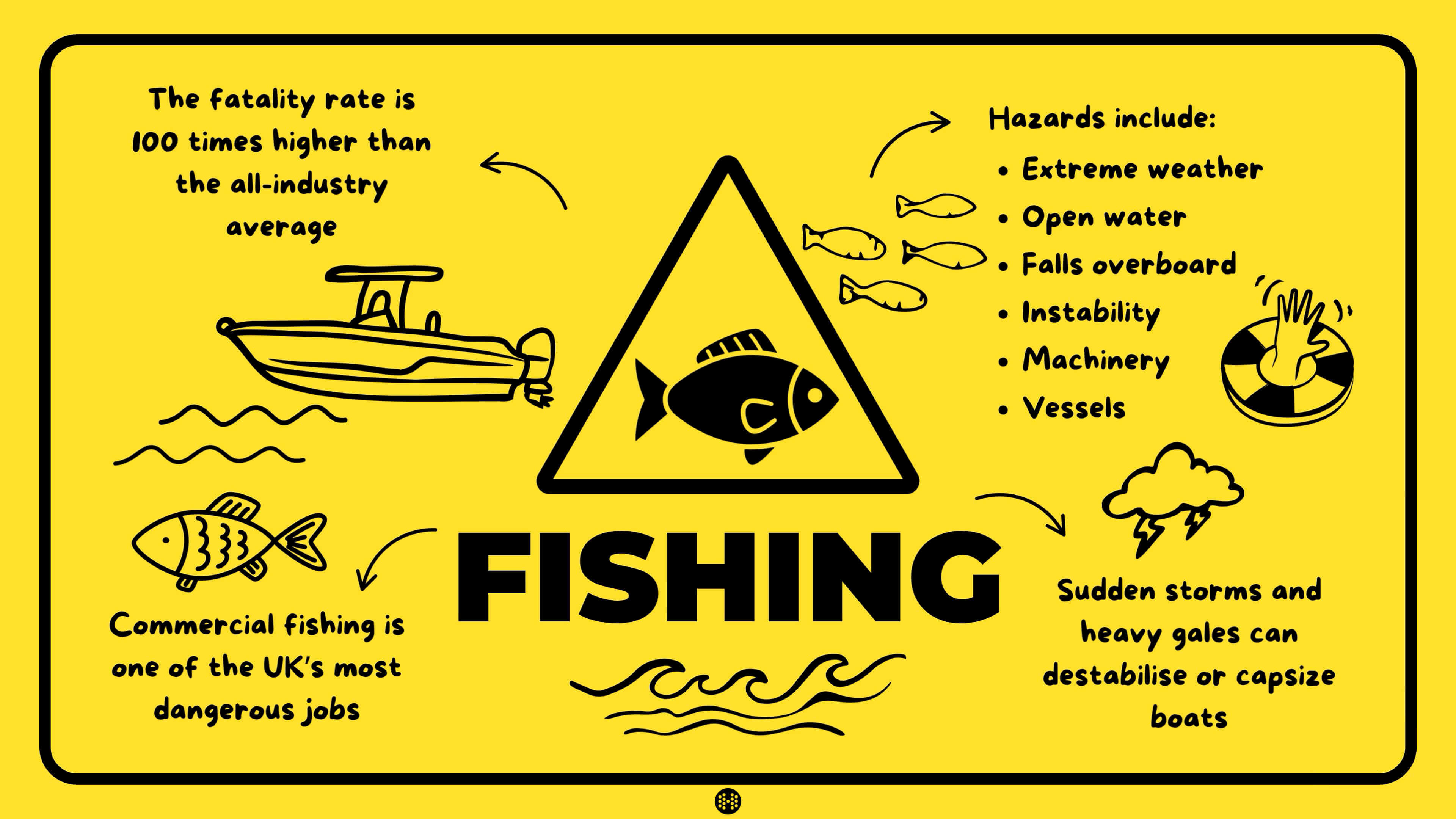
Potential hazards include:
- Severe weather and rough seas.
- Falling overboard.
- Unstable vessels and capsizing.
- Entanglement in fishing gear.
- Moving machinery and equipment.
- Slips and falls on wet decks.
Sudden changes in weather can make working at sea particularly hazardous. A person falling overboard may also face difficulties being recovered quickly, especially in poor conditions.
Reducing the risks: Vessel stability, weather planning, suitable life-saving equipment, safe working procedures and effective man-overboard arrangements are important controls for managing fishing safety.
2. Farming and agriculture
Agriculture has the highest fatal injury rate of any main industry sector in the latest HSE figures.
Farm workers may work alone, operate heavy machinery, handle livestock and carry out maintenance in challenging conditions.
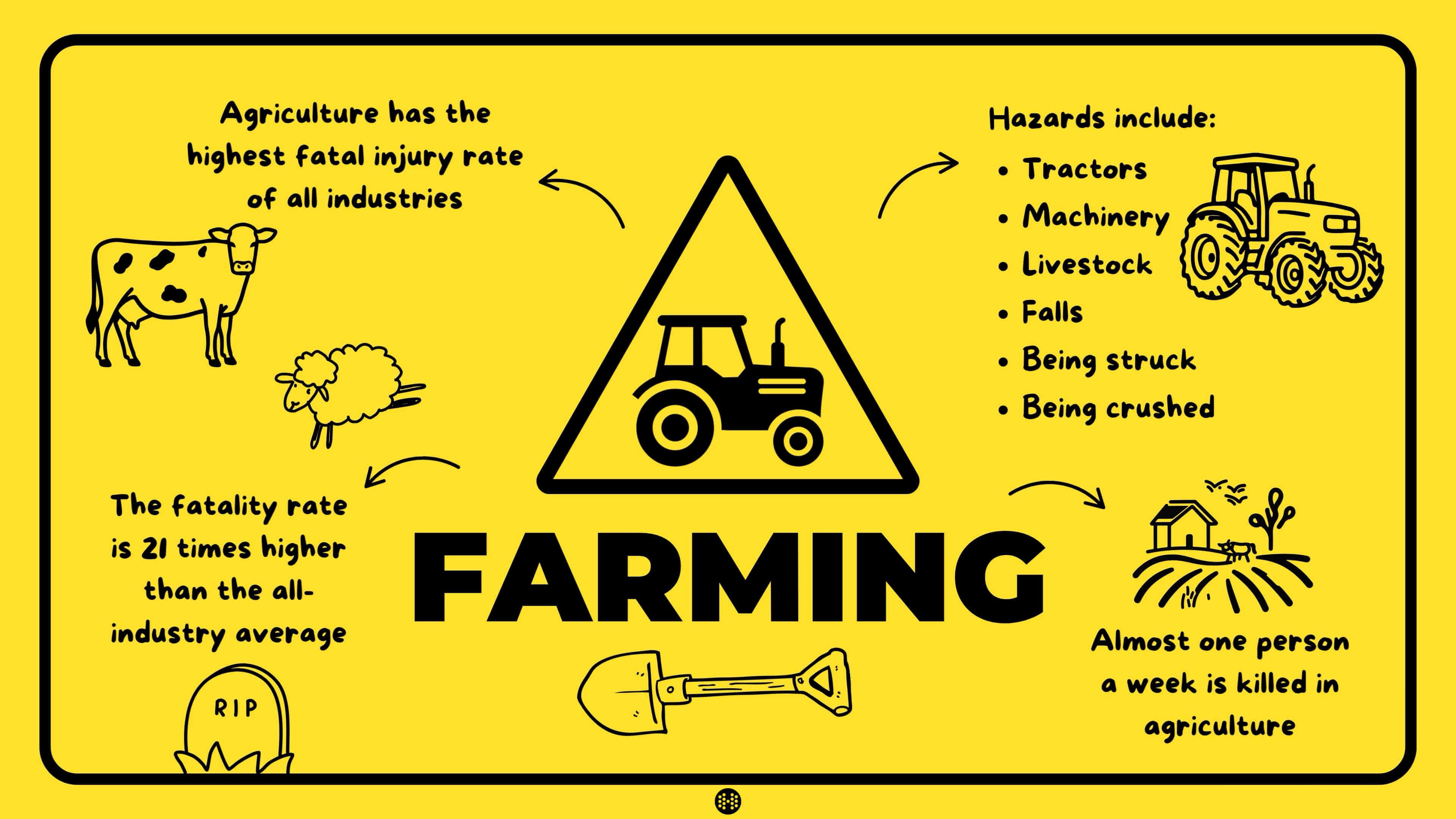
Common hazards include:
- Tractors and other moving vehicles.
- Machinery with dangerous moving parts.
- Being struck or crushed by equipment.
- Injuries involving livestock.
- Falls from height.
- Contact with electricity or hazardous substances.
Agricultural incidents can have serious consequences because heavy machinery and large animals are powerful and can cause severe injuries. Working alone can also delay assistance following an incident.
Reducing the risks: Machinery must be suitable and properly maintained, workers need appropriate training, and safe systems of work should address vehicle movements, livestock handling and maintenance activities.
3. Forestry and tree work
Forestry and tree surgery involve hazardous activities, including felling trees, removing branches and operating chainsaws.
The work can become particularly dangerous when trees are unstable, branches are under tension, or workers are operating on uneven ground.
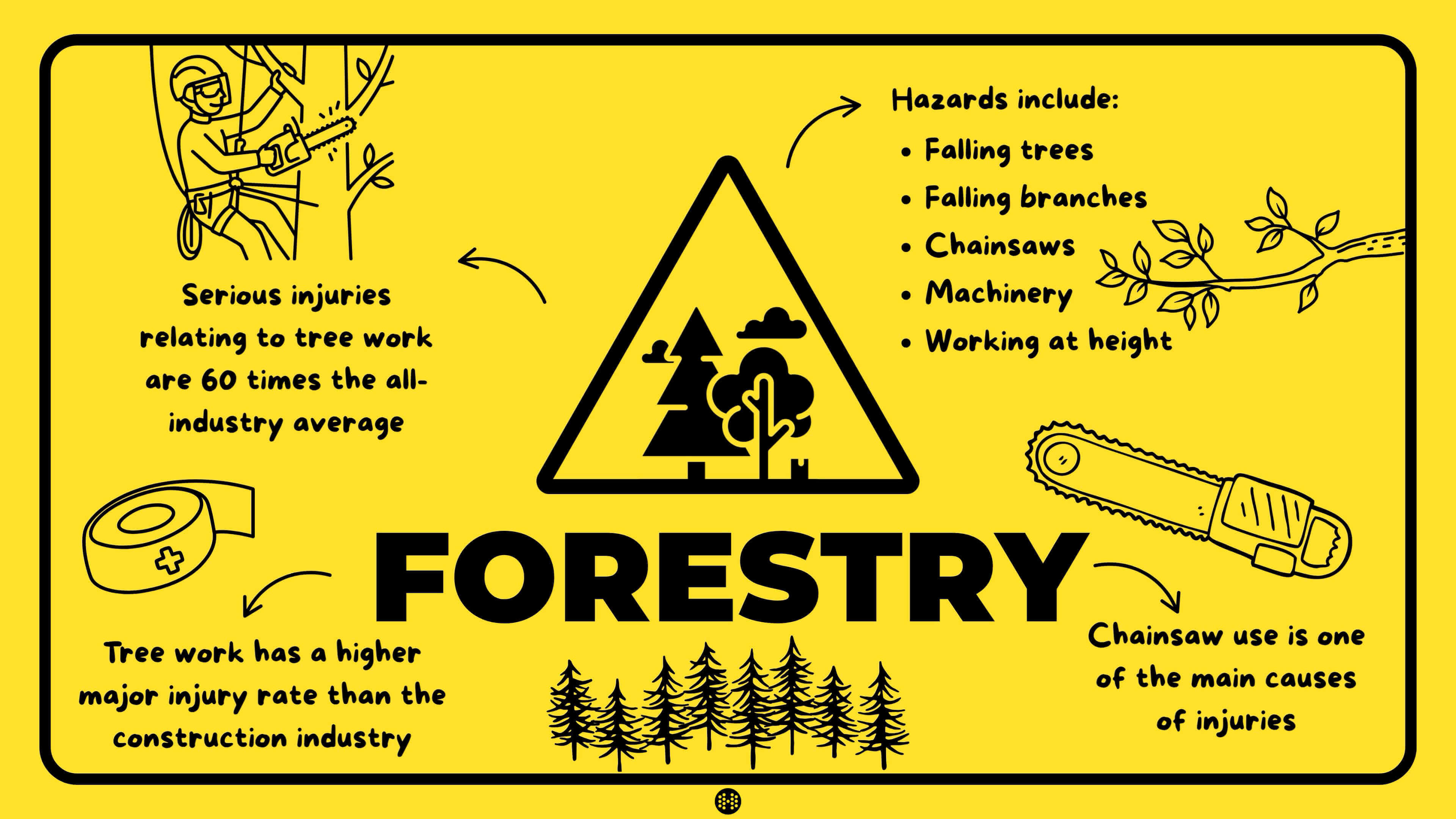
Potential hazards include:
- Falling trees and branches.
- Chainsaw injuries.
- Moving machinery.
- Falling from trees or access equipment.
- Contact with overhead power lines.
- Unpredictable tree movement.
Chainsaws can cause severe injuries, and a falling tree or large branch could strike or crush workers and people nearby.
Reducing the risks: Tree work requires competent people, appropriate equipment, careful assessment of the tree and surrounding area, and effective exclusion zones. Complex or high-risk work may require specialist planning and expertise.
4. Roofing
Roofing is one of the most dangerous construction trades, and falls from height are a major concern.
Almost one in five deaths in construction work involve roof work, including incidents involving people carrying out repairs and maintenance rather than specialist roofing.
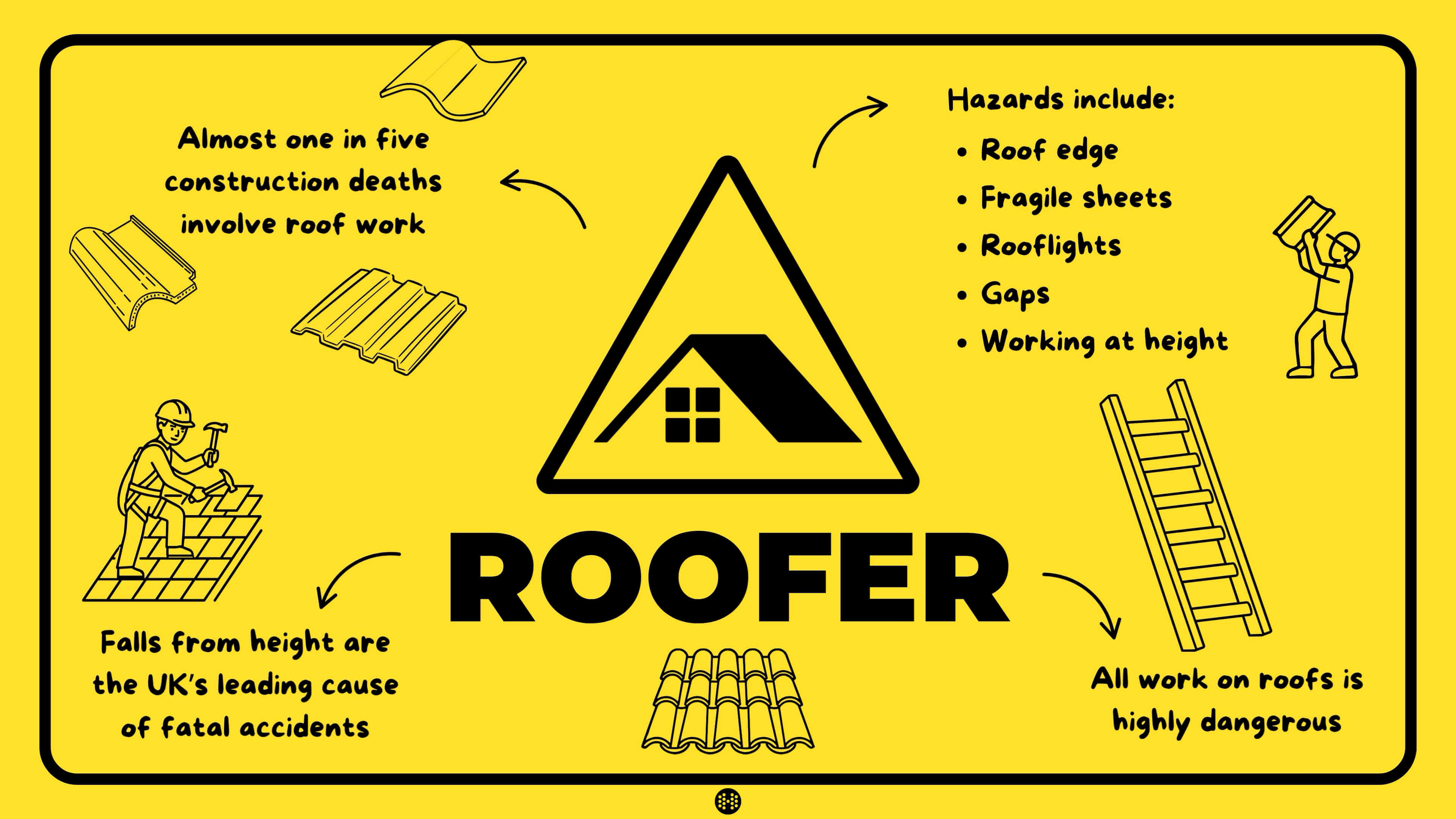
Common hazards include:
- Falls from roof edges.
- Falling through fragile roofing sheets.
- Falling through rooflights.
- Unprotected openings and gaps.
- Falling materials and tools.
- Unsafe access to roofs.
One of the biggest misconceptions about roof work is that a short job is a safe job. Even brief tasks can result in serious injuries if the work has not been planned properly.
Reducing the risks: Work should be planned before anyone accesses the roof. Suitable access, edge protection, barriers, platforms and other appropriate fall-prevention measures should be considered. Fragile surfaces must be identified and protected against.
Find out more about roof work safety with 20 roofing safety topics.
5. Scaffolding
Scaffolders assemble, alter and dismantle structures that provide access for work at height. The work requires careful coordination and attention to the stability of the scaffold.
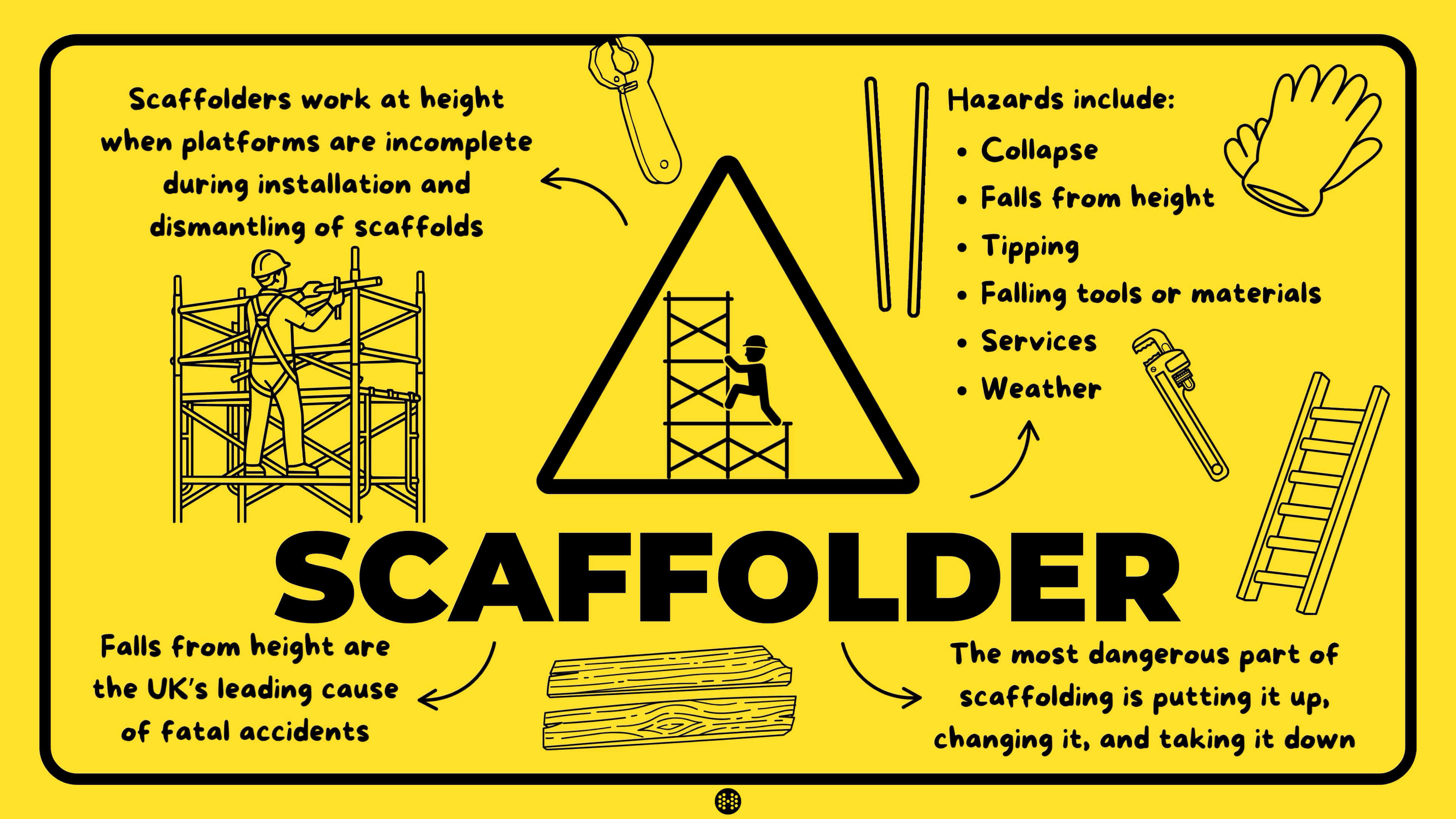
Potential hazards include:
- Falls from incomplete scaffolds.
- Scaffold instability or collapse.
- Falling tools and materials.
- Incorrect assembly or alteration.
- Contact with overhead services.
- Adverse weather conditions.
Scaffold erection and dismantling require particular care because the structure may not yet have all its intended platforms, guardrails and other protective features.
Reducing the risks: Scaffolds should be erected, altered and dismantled by competent workers following a properly planned sequence. The scaffold must be suitable for its intended use, and scaffolding inspection arrangements must be in place.
6. Construction
Construction accounts for the highest number of worker fatalities among the main industry sectors in the latest statistics.
The industry covers a wide range of activities, from groundworks and structural work to electrical installation, roofing and finishing trades. Each activity brings its own hazards.
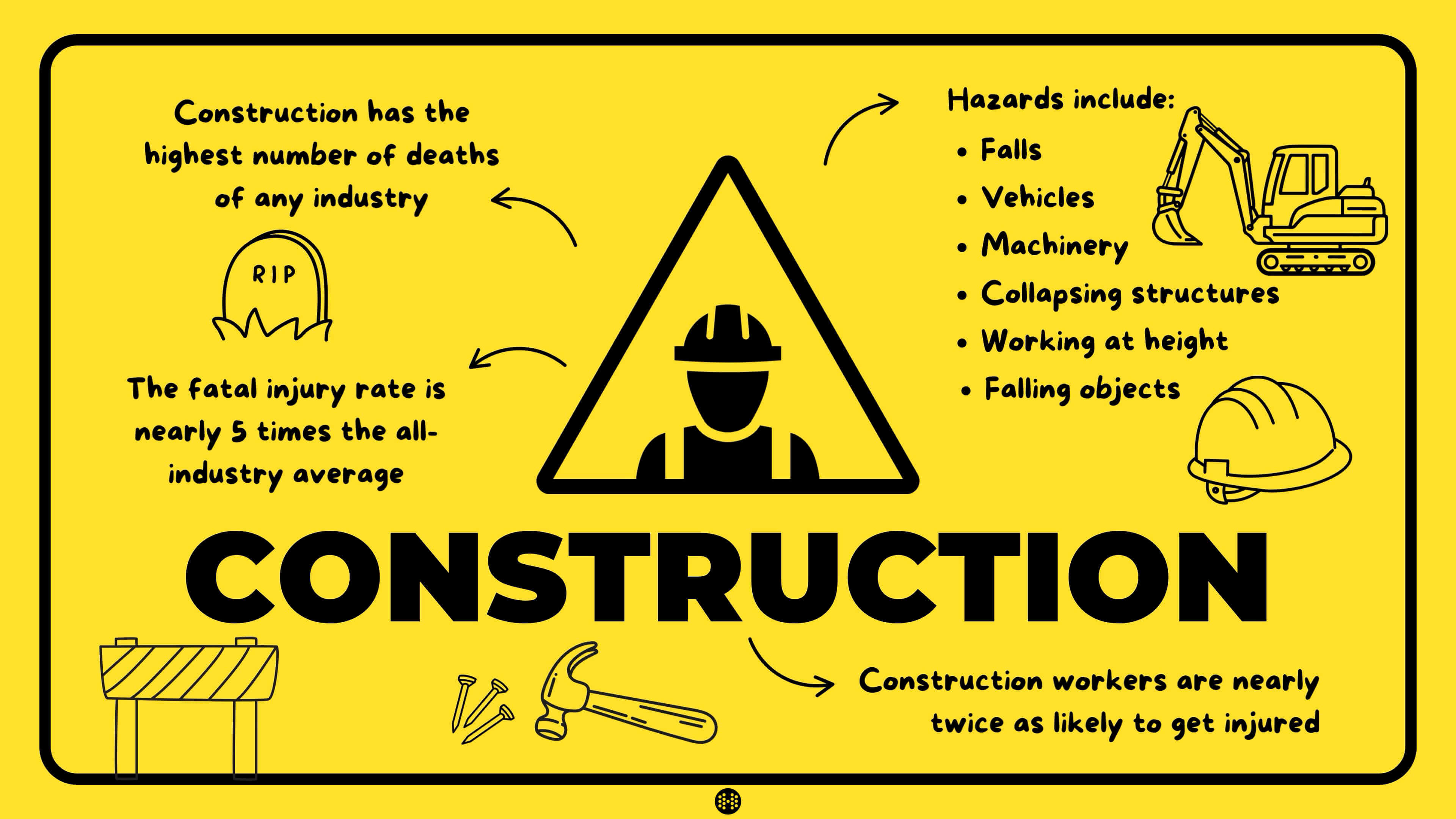
Common risks include:
- Falls from height.
- Being struck by moving vehicles.
- Contact with machinery.
- Falling objects.
- Excavation collapse.
- Structural collapse.
- Contact with electricity and underground services.
Construction sites can change rapidly as work progresses. Multiple contractors may also be working in the same area, creating additional coordination challenges.
Reducing the risks: Effective planning, suitable risk assessments, safe systems of work, competent supervision and coordination between contractors all help control workplace risks. Controls must be appropriate to the specific activity and site conditions.
Construction projects must comply with the CDM regulations - use our free CDM checklist to see if your project complies.
7. Waste and recycling
Waste collection, recycling and processing involve heavy vehicles, moving machinery and materials that may be hazardous.
The HSE's provisional 2025/26 figures identify waste and recycling as having the second-highest fatal injury rate among the main industry sectors.
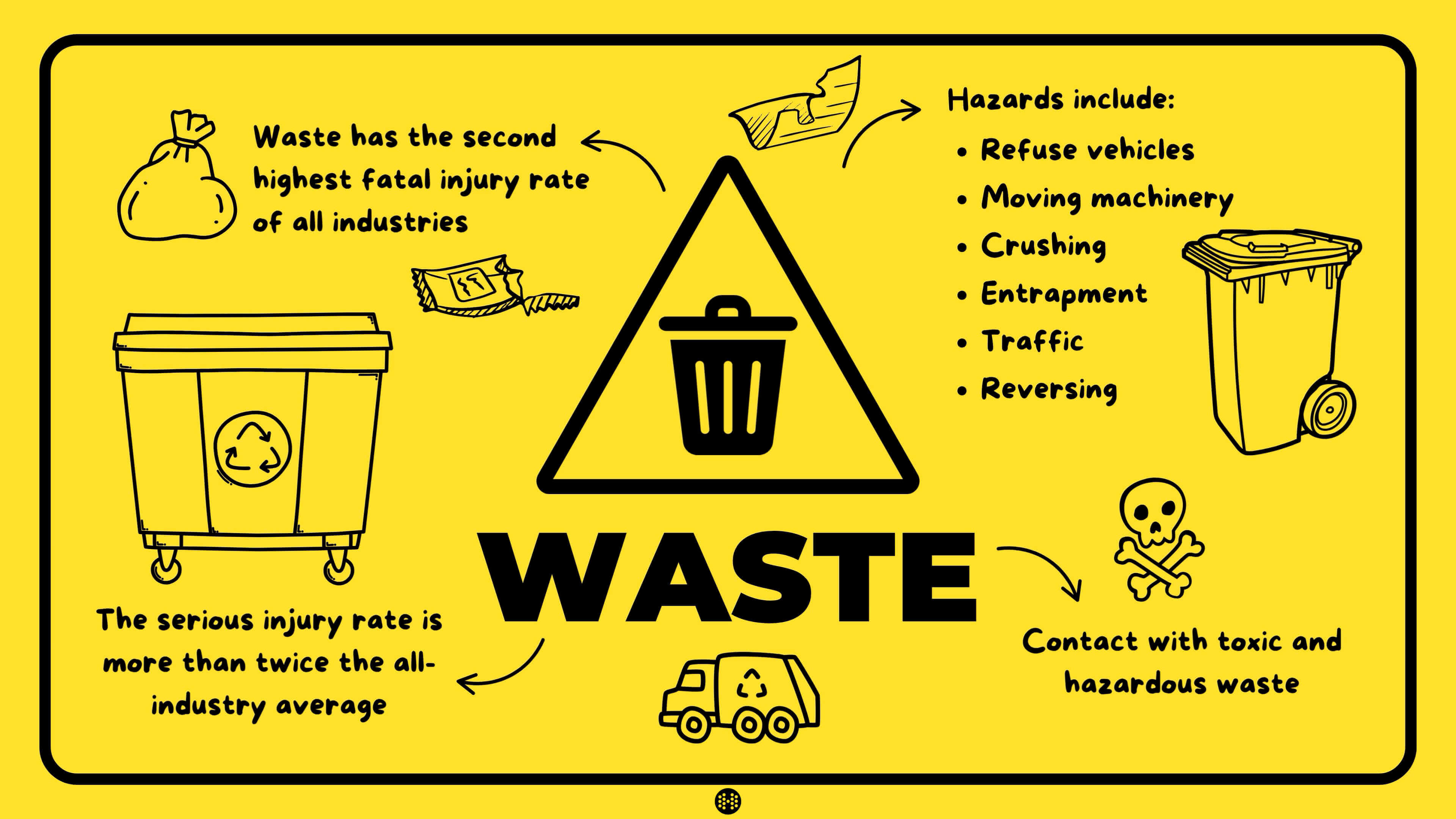
Potential hazards include:
- Being struck by refuse collection vehicles.
- Reversing vehicles and moving traffic.
- Crushing and entrapment in machinery.
- Moving conveyor systems.
- Handling sharp or hazardous waste.
- Slips, trips and falls.
Workers may also encounter materials that pose health risks, including hazardous substances or items discarded incorrectly.
Reducing the risks: Safe vehicle movements, effective segregation of pedestrians and vehicles, machinery guarding, isolation procedures and suitable handling arrangements are important controls.
8. Plant operators
Plant operators use machinery such as excavators, dumpers and telehandlers to move materials, prepare ground and support construction activities.
These machines can create serious risks when operating near people, structures, excavations or overhead services.
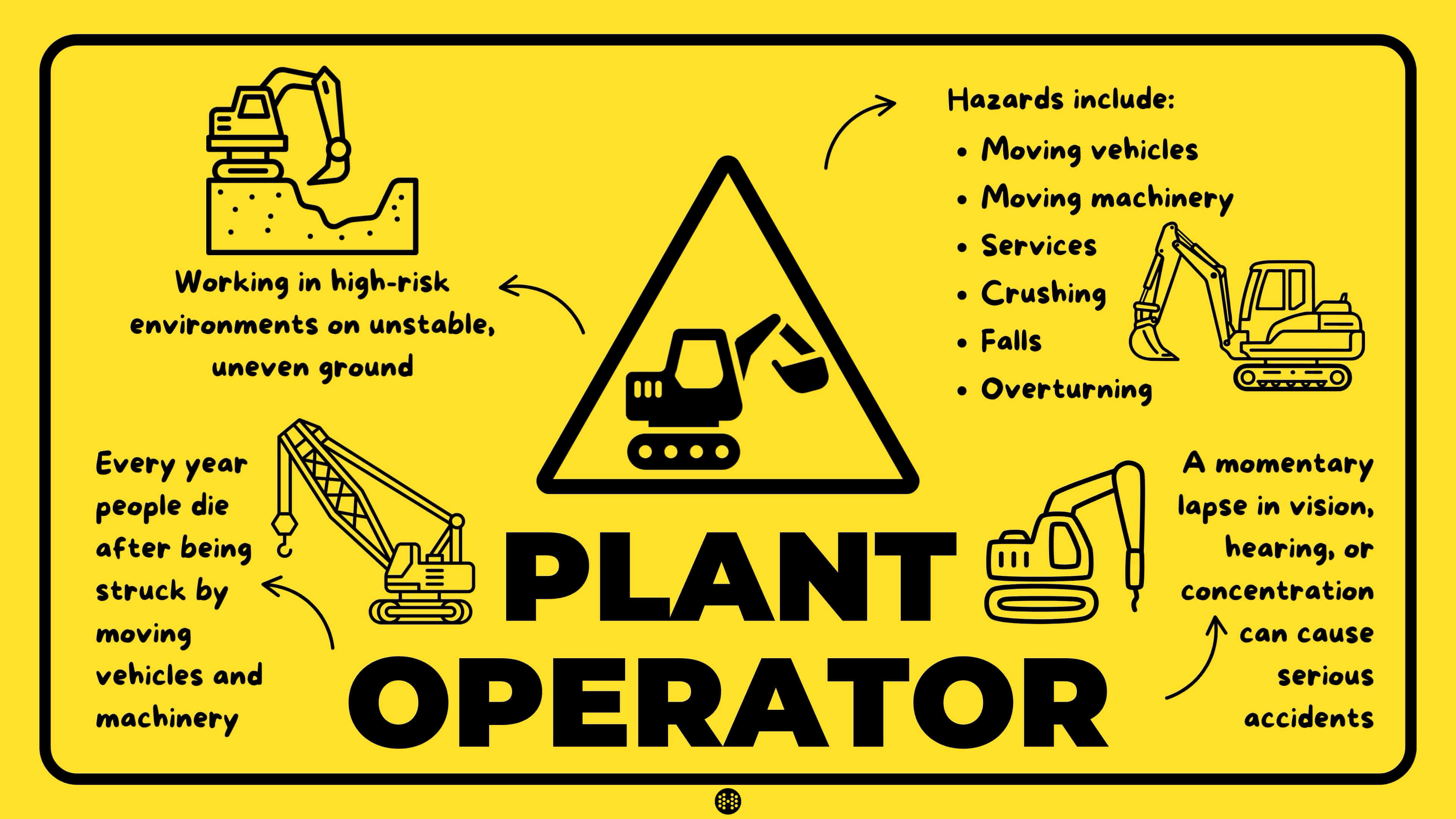
Common hazards include:
- Collisions with pedestrians or other vehicles.
- Machinery overturning.
- Crushing and trapping.
- Contact with underground or overhead services.
- Falls when accessing or leaving machinery.
- Falling loads or materials.
Uneven ground, poor visibility and restricted working areas can make operating plant particularly challenging.
Reducing the risks: Machinery must be suitable for the task, operated by competent people and used in accordance with the planned working arrangements. Traffic management, safe distances, visibility and ground conditions must all be considered.
9. Groundworkers
Groundworkers carry out excavation, drainage, foundation preparation and other work below or near ground level.
Excavations can be particularly dangerous because ground conditions may change, and a collapse can happen with little warning.
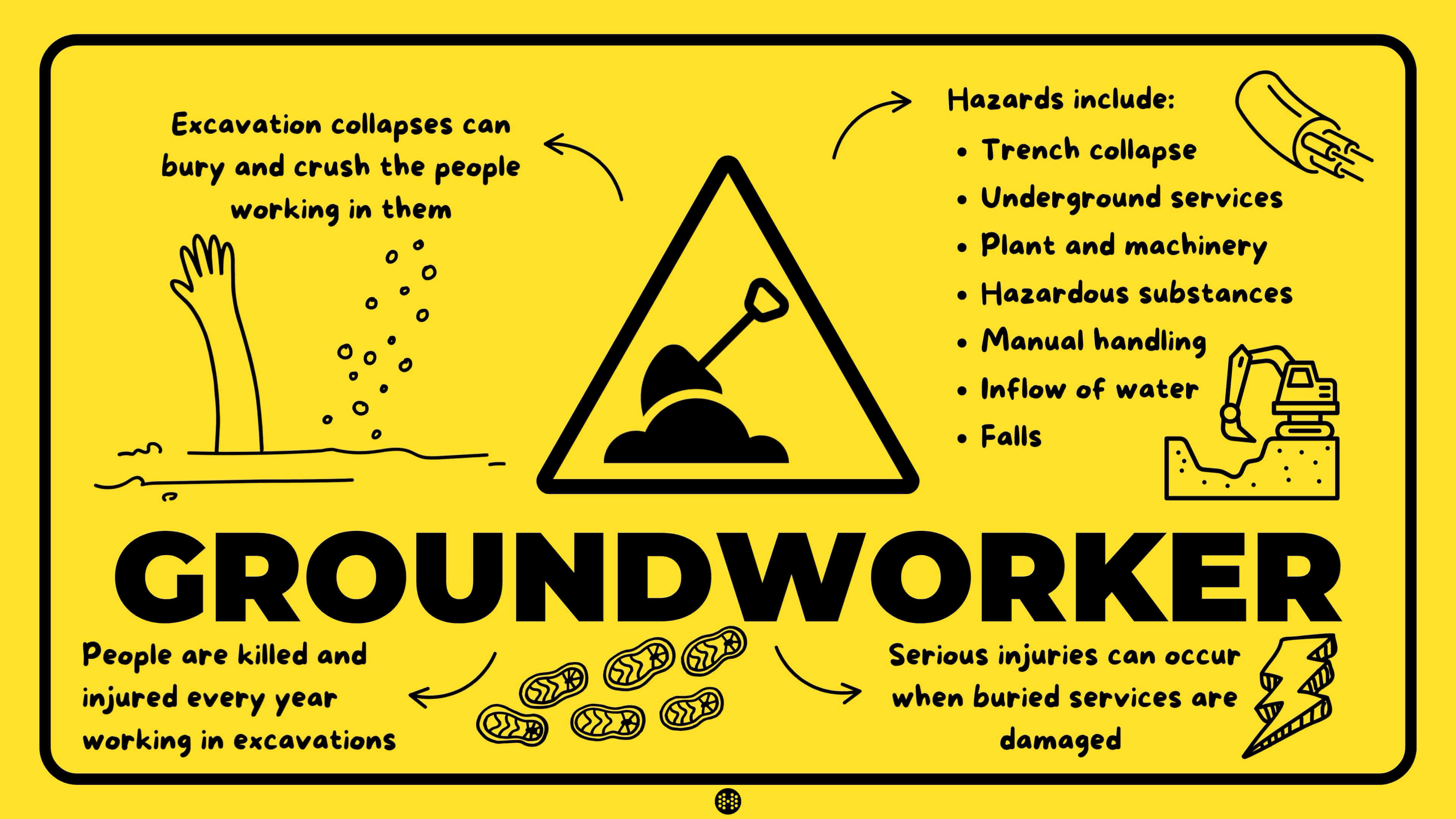
Potential hazards include:
- Trench and excavation collapse.
- Damage to underground services.
- Struck-by incidents involving plant.
- Falls into excavations.
- Water entering excavations.
- Contact with contaminated ground or hazardous substances.
- Manual handling injuries.
A damaged underground electricity cable, gas pipe or water main can also create additional risks for workers and other people nearby.
Reducing the risks: Excavations must be planned and assessed for the ground conditions and work involved, and regularly inspected by a competent person. Suitable support or other protective measures, safe access, service identification and arrangements for dealing with water ingress may be necessary.
Never assume an excavation is safe simply because it is shallow or has been open for only a short time.
10. HGV drivers
Heavy goods vehicle (HGV) drivers transport materials and goods across the UK. Their work involves more than driving: loading, unloading, vehicle checks and deliveries can all introduce risks.
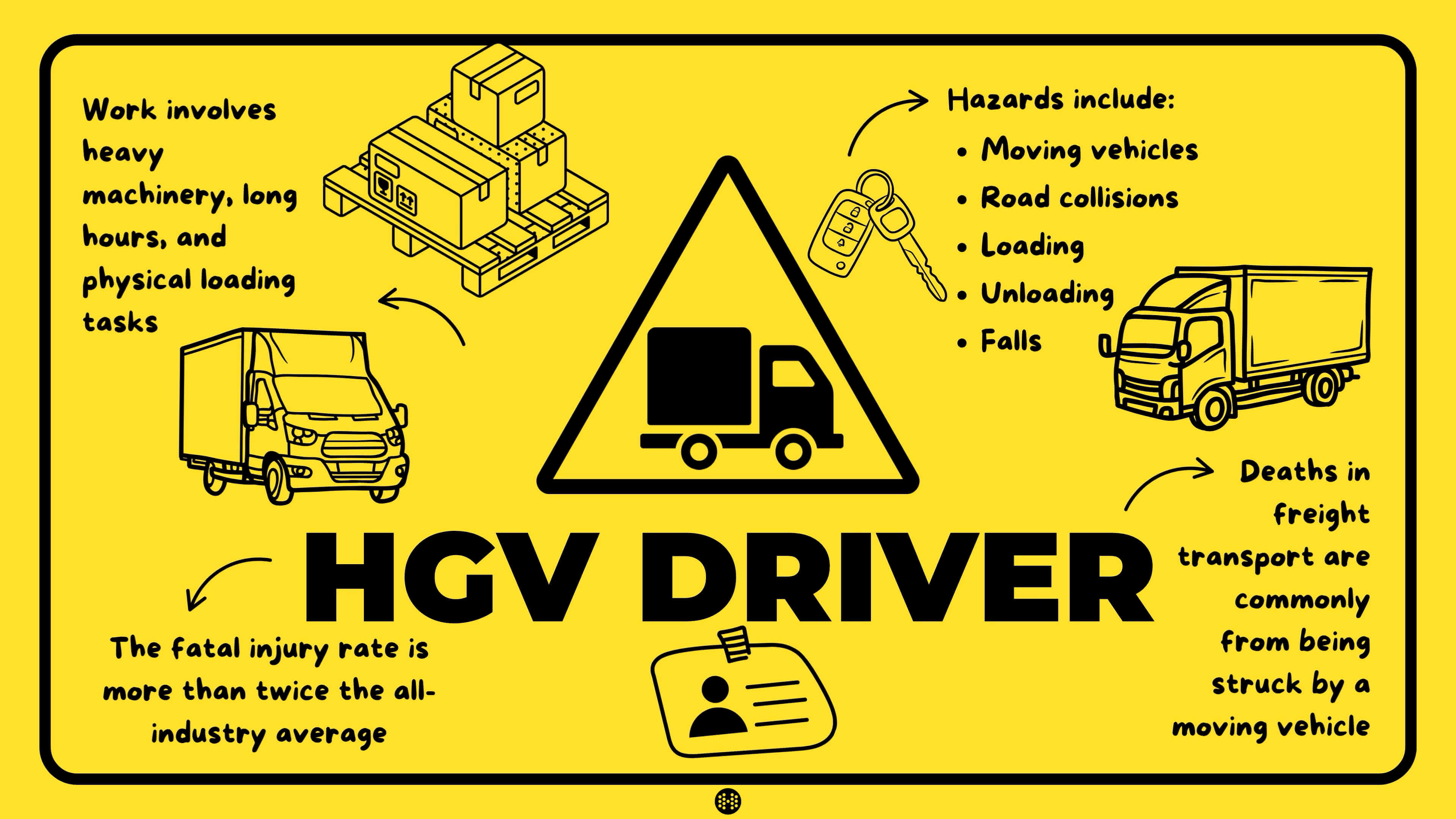
Common hazards include:
- Road traffic collisions.
- Being struck by moving vehicles.
- Falls when accessing vehicles or loads.
- Injuries during loading and unloading.
- Moving or unsecured loads.
- Manual handling tasks.
Drivers may also work under time pressures and encounter difficult weather, congested delivery areas or unfamiliar sites.
Reducing the risks: Safe journey planning, vehicle maintenance, suitable loading arrangements, secure loads and well-managed delivery areas all help reduce risks. Employers and drivers should also ensure that working arrangements comply with applicable driving-time and rest requirements.
What makes a job dangerous?
These examples show that workplace risk is not limited to one trade or industry. Different activities create different hazards, and the same occupation can involve very different levels of risk depending on the task and working conditions.
Some recurring factors include:
- Working at height: Falls can cause fatal or life-changing injuries.
- Moving vehicles and machinery: Workers can be struck, crushed or trapped.
- Unstable structures and ground: Collapses can bury or crush workers.
- Hazardous environments: Water, weather, confined spaces and hazardous substances can introduce additional risks.
- Poor planning: Inadequate preparation, unsuitable equipment or unclear working arrangements can leave hazards uncontrolled.
The important question is not simply which job is the most dangerous, but what makes the work hazardous and how those risks can be controlled.
How can workplace risks be reduced?
Employers should identify the hazards associated with the work and put suitable measures in place to protect workers and other people who could be affected.
Depending on the activity, this may involve:
- Planning the work and assessing the risks.
- Eliminating hazards where reasonably practicable.
- Choosing suitable equipment and protective measures.
- Providing appropriate information, instruction, training and supervision.
- Maintaining equipment and inspecting it where required.
- Reviewing arrangements when working conditions or the scope of work change.
Personal protective equipment (PPE) can be important, but it should not be treated as a substitute for effective planning and higher-level controls where these are reasonably practicable.
The right precautions depend on the work being carried out, the hazards identified and the applicable legal requirements.
Official statistics can help us understand where serious and fatal workplace injuries are more likely to occur, but they must be interpreted correctly. Total deaths, fatal injury rates and non-fatal injury rates measure different things, and serious accidents can and do happen even in low-risk workplaces.
For workers and employers, the practical priority remains the same: understand the hazards, plan the work and put effective controls in place before the job begins.
Use our free health and safety audit checklist to work through the key areas of workplace safety and identify anything that may need further attention.


This article was written by Emma at HASpod. Emma has over 10 years experience in health and safety and BSc (Hons) Construction Management. She is NEBOSH qualified and Tech IOSH.
Better health and safety...
We are here to help you and your business put safety in everything.
Learn MoreRecent posts like this...
Most Dangerous Jobs In The UK: 10 High-Risk Jobs And Industries
Some jobs carry greater risks of fatal or serious injury than others. In this guide, we look at ten high-risk occupations, trades and industries, the hazards workers may face, and why managing health and safety is so important.
Read Post
10 Reasons Why You Can Achieve Zero Harm
Zero harm can never be achieved at work. It is unrealistic, practically impossible, and meaningless. These are all arguments against zero harm, and there are many (including health and safety professionals) who agree with them. So, is zero harm just setting ourselves up for failure?
Read Post The Definition Of Risk In Health And Safety (With Workplace Examples)
In health and safety, a risk is the chance that somebody could be harmed. A risk calculates how likely it is that someone will be hurt, and how severely. In this post, we look at the definition of risk in health and safety, and some common examples of workplace risks.
Read Post