15th July, 2026
What Substances Does COSHH Cover?
The COSHH regulations cover substances that are hazardous to health. If a substance, in any form, could cause harm to a person, it needs to be assessed under the COSHH regulations. The substances covered by COSHH include chemicals, mixtures, dust, gases, fumes and biological agents.

The Control of Substances Hazardous to Health (COSHH) Regulations require you to control substances that are hazardous to health within your organisation. But what is a substance hazardous to health?
What substances does COSHH cover?
What is a hazardous substance?
It might seem obvious from the name, but the Control of Substances Hazardous to Health (COSHH) Regulations cover hazardous substances. That all seems to make sense, but what makes a substance hazardous?
A hazardous substance is any material or substance with the potential to cause illness or injury to people who come into contact with it.
First, it needs to be a substance. And if you're just thinking about the products and chemicals you purchase for your business, you're thinking too small.
“substance” means a natural or artificial substance whether in solid or liquid form or in the form of a gas or vapour (including micro-organisms); -- The Control of Substances Hazardous to Health Regulations 2002 - Interpretation
So a substance could be:
- Solid
- Liquid
- Vapour
- Gas
- Fume
- Dust
- Mist
- Germs
A substance might not be a product you purchase; it might be a dust you create when drilling a wall, or a fume that comes out of your machinery.
Substances might be:
- Purchased (e.g. products and chemicals)
- Produced (e.g. fumes and dusts)
For the substance to be covered by COSHH, it also needs to be hazardous. Because COSHH covers substances that are hazardous to health.
“hazard”, in relation to a substance, means the intrinsic property of that substance which has the potential to cause harm to the health of a person, and “hazardous” shall be construed accordingly;
According to this definition, if the properties of a substance, in any form, could cause harm to a person, then it is hazardous and will need to be assessed under the COSHH regulations.
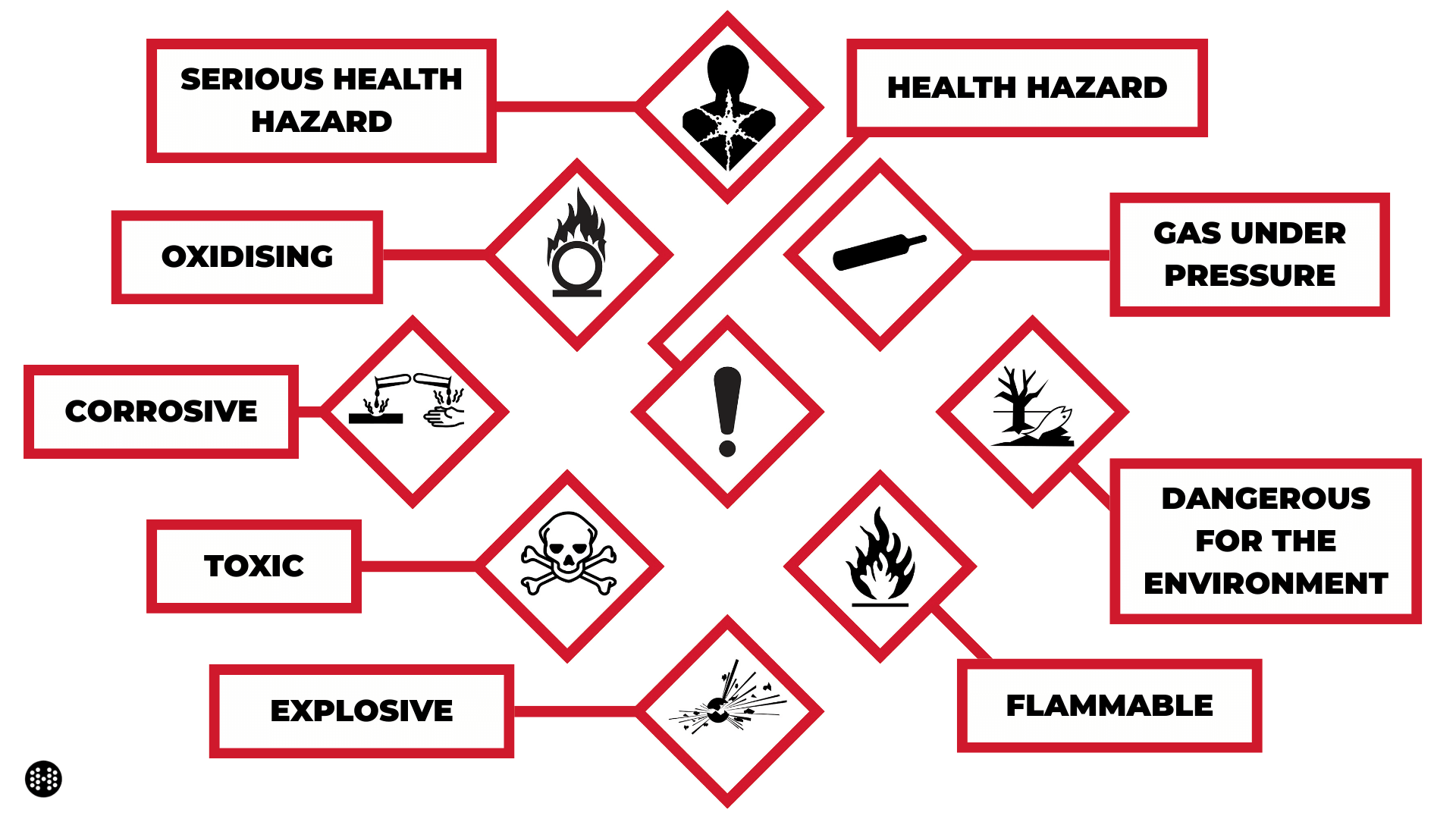
Read our blog post to learn more about the COSHH hazard symbols and meanings.
Harmful effects caused by hazardous substances can include:
- Cancer
- Asthma
- Lung disease
- Skin disease, e.g. dermatitis
- Burns
- Irritation to the skin
- Irritation to the eyes
- Respiratory irritation
- Sensitisation
- Infectious diseases, e.g. hepatitis
- Neurological damage
- Birth defects
- Impaired fertility
Examples of hazardous substances
Some hazardous substances in your workplace might be products you use directly. You might get exposed to these substances in different forms, like liquid, mist, fumes, or vapours.

Examples of hazardous substances purchased:
- Paints
- Thinners
- Solvents
- Cleaning agents
- Chemicals
- Products containing chemicals
You might also find that your business generates hazardous substances, for example, dust created when you sand or drill materials, or gases released when you mix substances together.

Examples of hazardous substances generated:
- Dust
- Gases
- Fumes
Hazardous substances aren't always man-made. Sometimes, naturally occurring substances can be hazardous, depending on their form. For example, flour can create a risk of explosion, and wood dust exposure can cause cancer.

Examples of naturally occurring hazardous substances:
- Silica
- Flour
- Wood dust
Sometimes, biological agents like Legionella and leptospirosis might be present in your workplace. As hazardous substances, bacteria and viruses are also covered by COSHH.

Examples of biological agents:
- Fungi
- Moulds
- Blue-green algae
- Bacteria
- Viruses
It's worth noting here that some very hazardous substances, such as asbestos, lead, and radioactive substances, are covered under their own separate regulations. While these are classified as hazardous substances, they don't come under COSHH as more specific requirements are needed.
Other than these special exclusions, which have additional legal requirements, all hazardous substances are covered by COSHH.
Identifying hazardous substances
The COSHH regulations apply to a wide range of substances and mixtures. This includes substances classified as toxic and harmful, those given a workplace exposure limit (WEL), biological agents, hazardous dust, and any dust when present in hazardous quantities.
It also includes any other substance where the way it is used or is present at the workplace creates a health risk.
So, how do you identify hazardous substances present or used in your workplace?
“substance hazardous to health” means a substance (including a preparation)—
- which meets the criteria for classification as hazardous within any health hazard class as provided for in the CLP Regulation whether or not the substance is classified under that Regulation;
- for which the Health and Safety Executive has approved a workplace exposure limit
- which is a biological agent;
- which is dust of any kind, except dust which is a substance within paragraph (a) or (b) above, when present at a concentration in air equal to or greater than—
- (i) 10 mg/m3, as a time-weighted average over an 8-hour period, of inhalable dust, or
- (ii) 4 mg/m3, as a time-weighted average over an 8-hour period, of respirable dust;
- which, not being a substance falling within sub-paragraphs (a) to (d), because of its chemical or toxicological properties and the way it is used or is present at the workplace creates a risk to health;
The first step in becoming COSHH compliant is to identify the substances used or produced within your business processes. Some hazardous substances used within your business will be obvious, but some everyday substances should also be assessed under COSHH.
You can't control the risk until you know where the hazards are.
Check the substances you purchase
For substances purchased in your workplace, you might find hazard symbols on the packaging.
Often, the labels on bottles and containers will contain warning messages and hazard symbols to indicate the risks. These red diamond pictograms are easy to spot.
Where substances are purchased, you can check the safety information on labels and the information provided by suppliers (usually on a safety data sheet, hazard data sheet or other similar product information sheet).
You should request product information from suppliers whenever a new substance is used, as the sheet will contain important information relating to storage, use and the properties of the product.

Risk and safety phrases will give you a good indication of how the substance could be harmful to you and your team.
Check the substances you produce
Some substances might not be purchased from a supplier, but may be produced as a result of your work processes.
For example, the wood dust produced in a joinery workshop or on a construction site should be assessed under the COSHH regulations. Hardwood dust is classified as a carcinogen (can cause cancer), so it is covered by COSHH, and exposure must be minimised and monitored.
To identify substances produced during work processes, carry out a COSHH inspection. Walk around your workplace and look for processes that could produce dust, fumes, vapours, mist or gas, and where skin comes into contact with liquids, pastes and powder.

Check how substances are present in the workplace
It's important to assess your work and identify which substances could harm your health - you might be surprised.
For example, in some workplaces, even water can come under COSHH. Yes, water! It's not a hazardous substance, but if your work means having your hands wet for a long time or frequently wet during the day, this can irritate your skin, leading to dermatitis. So the substance isn't necessarily hazardous, but the way it is used or is present at the workplace creates a health risk.
So what substance is present in your workplace or work environment? And how is it used? Could it create a health risk?
You can find out more about COSHH in our blog post about why COSHH is important in your workplace.
Your existing knowledge and the knowledge of those you employ to carry out and supervise your business activities should also be used in substance identification. You and your team have specific knowledge of the process and industry experience, and this can be used to help minimise the risks from substances in your workplace.
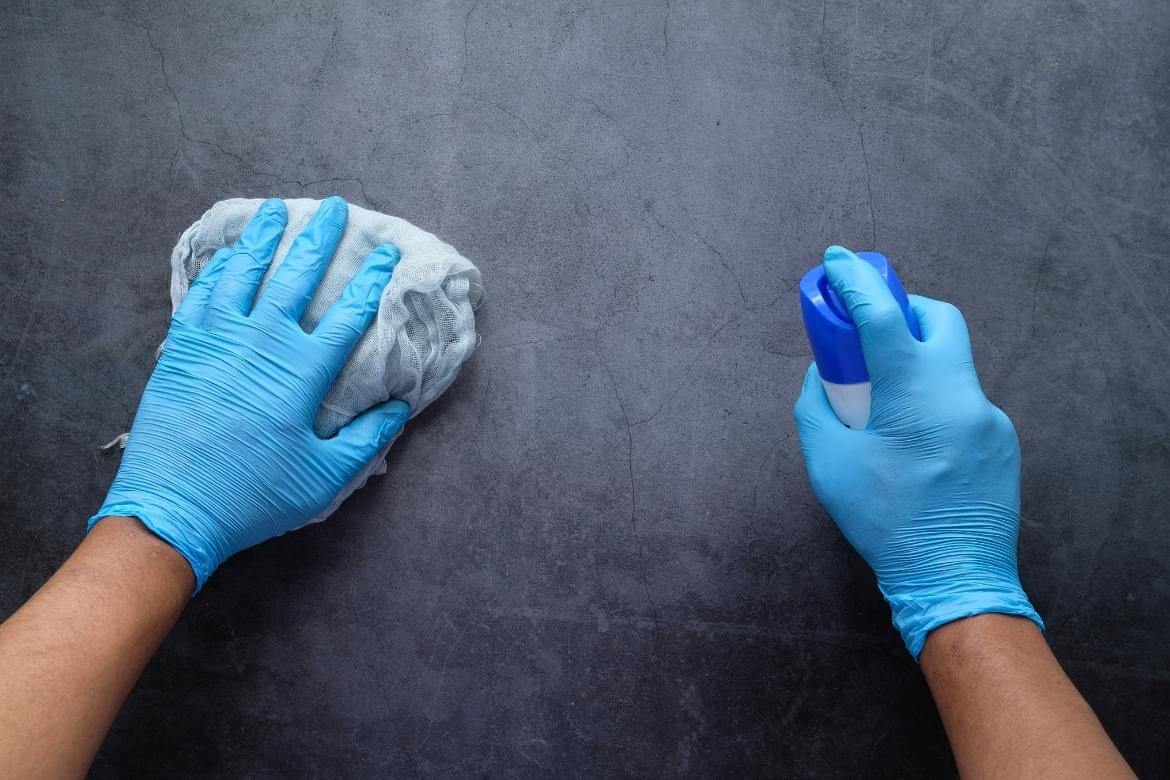
You can also look for areas of concern from health surveillance, staff complaints and the accident book. Look into any reports of skin burns, dermatitis, nausea, or light-headedness from solvents, etc.
Industry knowledge from trade press and data, professional bodies, associations, publications, best practices and HSE guidance material can be used to supplement your in-house knowledge and supplier data. These information sources will often highlight substances that are causing issues in your specific line of work.
When finding which substances you use and produce in your work covered by COSHH, remember to look for:
- Labels
- Hazard symbols
- Safety data sheets
- Workplace exposure limits (WELs)
- Supplier data
- Manufacturer data
- Trade information
- HSE guidance
- Employee data
- Health surveillance
Once you have identified the substances that are hazardous to health within your workplace, you can then create a COSHH inventory and carry out the required COSHH assessments to minimise the risk and control exposure.
If you need help writing your COSHH assessments, you can start free with the blank COSHH assessment template, or browse the library of ready-to-use COSHH assessment templates.


This article was written by Emma at HASpod. Emma has over 10 years experience in health and safety and BSc (Hons) Construction Management. She is NEBOSH qualified and Tech IOSH.
Need to know COSHH?
Take our COSHH awareness elearning course and get your certificate today.
COSHH CourseRecent posts like this...
Under The COSHH? Take The 3-Minute UK Compliance Check
Is your UK business under the COSHH? Nearly every business needs to comply with the Control of Substances Hazardous to Health Regulations. Use our 3-minute compliance check to see if your workplace complies and how to fill any gaps.
Read Post
Who Is Responsible For COSHH In The Workplace?
Employers, employees and the self-employed have responsibilities under COSHH, but who is responsible for COSHH in the workplace? What about when multiple businesses or contractors work together on a project? Or if your employees work at other premises?
Read Post
The Purpose Of COSHH Assessments And Why Every Business Needs Them
The purpose of the COSHH regulations is to minimise the risks associated with substances that are hazardous to your health and the health of your employees, therefore reducing the number of people made ill through exposure to harmful substances. Do you comply with COSHH in your business?
Read Post