4th December, 2025
10 Winter Safety Tips For Construction Workers
Working outside in the winter can be a challenge for keeping warm, but winter work can also create safety hazards and increase the risk of accidents on site, due to poor weather conditions, reduced lighting, and hidden dangers. Here are 10 winter safety tips for construction workers.

We've talked about how the cold can affect your health in surviving winter work, and ways to keep warm in winter, but what about safety?
Working outside in construction during winter can increase the risk of accidents for several reasons. There is less light in the winter. Ice and snow can build up during cold weather. There can be more rain and windy weather, and the temperature is lower.
Beyond the cold, winter brings safety hazards like poor lighting, shorter days, falling leaves, wet conditions, ice, and snow.
And when the weather is bad, people may take shortcuts to try to get out of the cold quickly, increasing safety risks.
But construction work can't just stop in the winter, especially since it can sometimes feel like winter for more than half of the year in the UK!
So when the cold weather arrives, here are 10 winter safety tips for construction workers:
- Clear surfaces
- Wear winter footwear
- Keep warm
- Provide additional lighting
- Wear PPE
- Use antifreeze
- Check equipment
- Secure tools and materials
- Protect hazards
- Monitor the weather
Clear surfaces
Keep pathways and access routes clear of snow, ice, and fallen leaves, and take precautions to protect the work area from the winter weather conditions.
Slip and trip accidents increase during the autumn and winter, according to HSE statistics. There are a number of reasons for this, but the big ones are that the ground becomes more slippery due to snow, ice, and fallen leaves.
Our first winter safety tip is to keep surfaces clear, particularly the places where people will be walking. You might need extra equipment like snow shovels and ice melt.

Pay close attention to places where the floor surface changes, too. For example, entrances to the site office, slopes, or going from grass to gravel, as these changes can create a slip hazard in wet conditions.
Snow and leaves can also hide changes in floor level and obstructions at ground level, increasing the risk of trips.
You can use sheeting and tents to keep work areas dry and protect surfaces, or clear pathways of snow, ice, and leaves at the start of each shift.
Wear winter footwear
Get winter work boots for better insulation, grip, and protection during the winter months.
Even if you clear surfaces, wet winter weather like rain, wind-blown leaves, and snow makes keeping them dry difficult.
Keeping surfaces clear is a good start to improving winter safety on construction sites, but you will be fighting a losing battle if you don't have a good grip.

Wearing the right footwear is important, not just to keep your socks dry and your feet warm, but to make sure you have the best grip possible.
If you wear the same safety boots all year round, consider getting some winter work boots for the colder conditions. Winter safety boots are designed to meet the demands of winter conditions, ensuring comfort, safety, and durability during harsh winter weather.
Keep warm
Keeping warm helps you concentrate and maintain your coordination in winter conditions.
Being cold at work isn't just bad for your health; it can affect your safety too.
When you're cold, you start to lose the ability to concentrate and have slower reactions. Shivering and numbness in your hands and body can prevent you from carrying out your tasks safely. You're probably also more likely to take shortcuts - just so you can finish up and get out of the cold!

Cold weather can increase the risk of accidents due to slower reactions and loss of coordination, which can occur if workers are affected by the cold.
Wearing layers and staying dry will help you stay warm when you are out in the cold. For more advice, here are 12 tips to keep you warm when working outside this winter.
Provide additional lighting
Make sure you have enough light to do your work and move about the site safely.
You don't usually need to worry about lighting when you are working outside, as you have natural light. But in the winter months, the days are shorter, and there's not as much daylight to go around.
You might be arriving and/or leaving work in the dark. And when there is daylight, it might not be so bright. Or you might have provided sheeting or tents to protect work surfaces (and workers) from the wintry conditions, making the work area darker.
When there's not enough natural light, you should provide additional artificial lighting to illuminate the work area. After all, workers need to be able to see blades, machinery, cables, and other hazards.
Wear PPE
Make sure PPE is compatible with your winter layers, to remain protected from year-round construction hazards.
You need to wear PPE all year round, so why is this on our list of winter safety tips? Because during winter, you might be so focused on keeping warm that you pop a winter jacket over your hi-viz, or wear a thicker pair of winter gloves instead of the chemical-resistant gloves you usually wear.
If you're not wearing your hi-viz, or it's hidden under a winter coat, machine drivers might not see you when they move around the site.

If you don't wear your chemical-resistant gloves, your winter gloves might become contaminated and expose your skin to harmful substances.
In winter, consider switching to the equivalent winter PPE if it's available, for example, a winter hi-viz coat. Alternatively, you might need to wear both, for example, wear a hi-viz vest over your coat you remain visible, or wear chemical-resistant gloves under your winter gloves to remain protected.
Use antifreeze
Antifreeze emsures that construction equipment operates smoothly and efficiently in cold weather.
If water in engines and cooling systems freezes, it can damage engines. To protect your vehicles and equipment, make sure you use antifreeze in the cooling system.
Some antifreeze can be used year-round, so you don't need to worry about forgetting to add it when the weather turns cold, but make sure you check antifreeze levels regularly in case you are running low.
You should replace antifreeze every 2 years, or as recommended by the manufacturer.
Check equipment
Regularly inspect and maintain equipment to make sure it functions safely in colder temperatures.
Cold weather and winter conditions can take their toll on construction equipment, especially if it is stored outside.
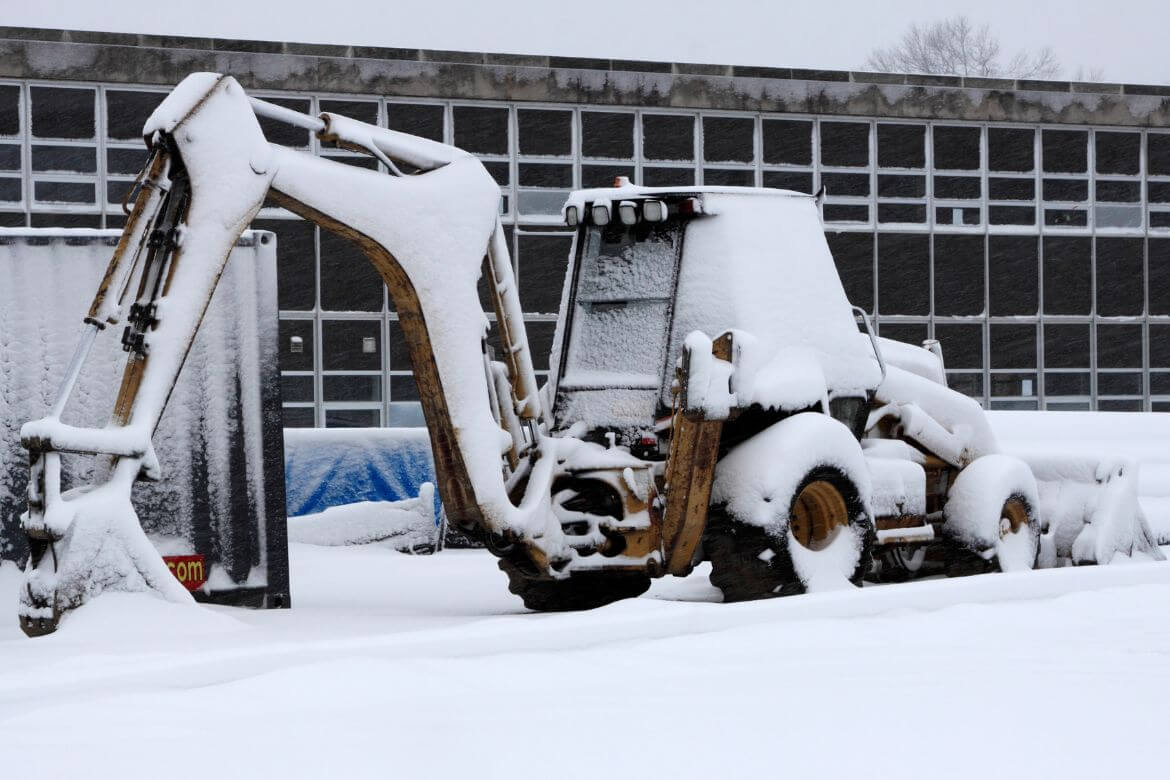
You should be regularly checking work equipment all year round, under PUWER, but in the winter, you should pay extra attention to fuel and hydraulic systems to prevent freezing.
Secure tools and materials
Securing tools, equipment, and materials against winter conditions can help keep your work safe and prevent accidents to you and others.
In the winter, there can be more risk from falling objects:
- Wind blowing materials
- Icy slippery surfaces
- The extra weight of snow can make materials unstable
- Slippery surfaces can make access equipment, like ladders, unsafe
If tools and materials are not secured adequately, winter storms could move even heavy materials and equipment like scaffolding, causing collapse and injuries on construction sites.
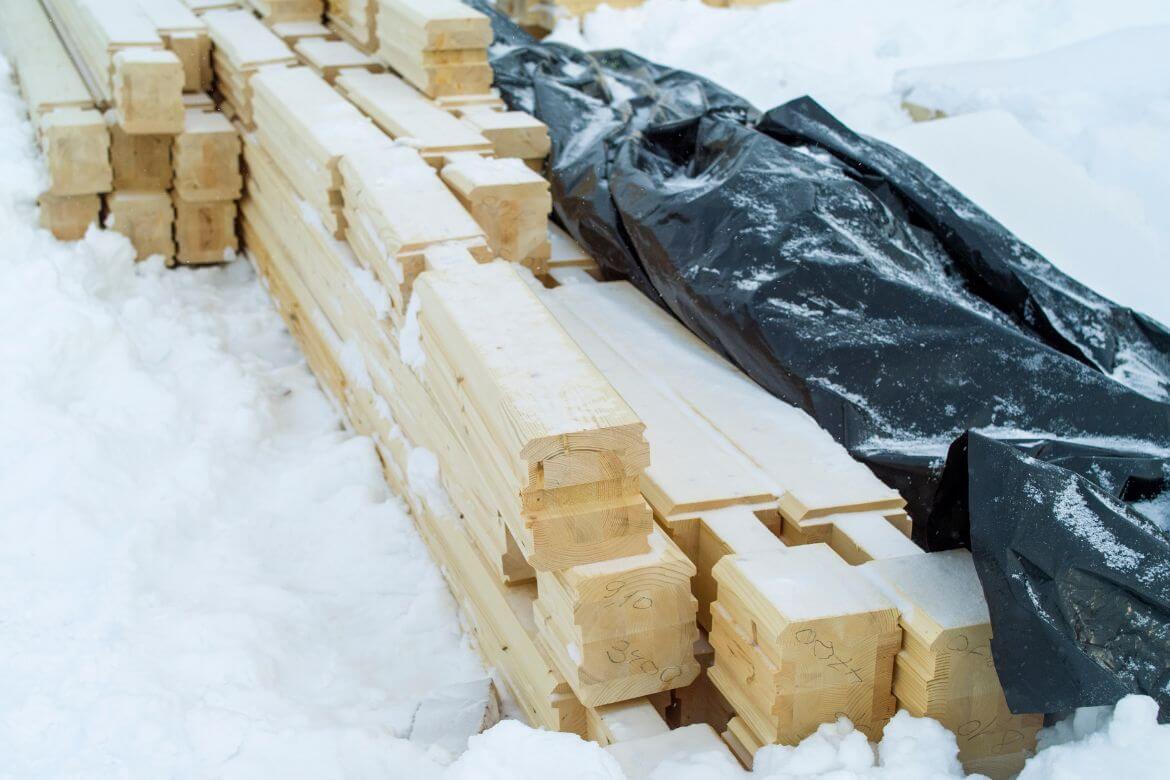
When your hands are wet and cold, or you are wearing gloves, tools might slip out of your hand. If you are working at height, this can be a major risk for the people below, so tethering, netting, or securing tools to prevent them from falling might be needed.
Always consider how the weather conditions might affect work at height, and if it is safe to move materials, carry out lifting operations, and use access equipment when the weather turns.
Protect hazards
Construction hazards can be hidden in winter conditions, so additional barriers and signage might be necessary.
A hazard is anything on your site with the potential to cause harm. And if a hazard, like an excavation, or a trip hazard like a trailing cable, is hidden under a layer of snow or fallen leaves, then it creates a bigger risk for your workers. Because if they don't know it's there, how can they stay safe?
Snow can cover uneven surfaces, icy patches, fragile surfaces, gaps, water, and even warning signs.
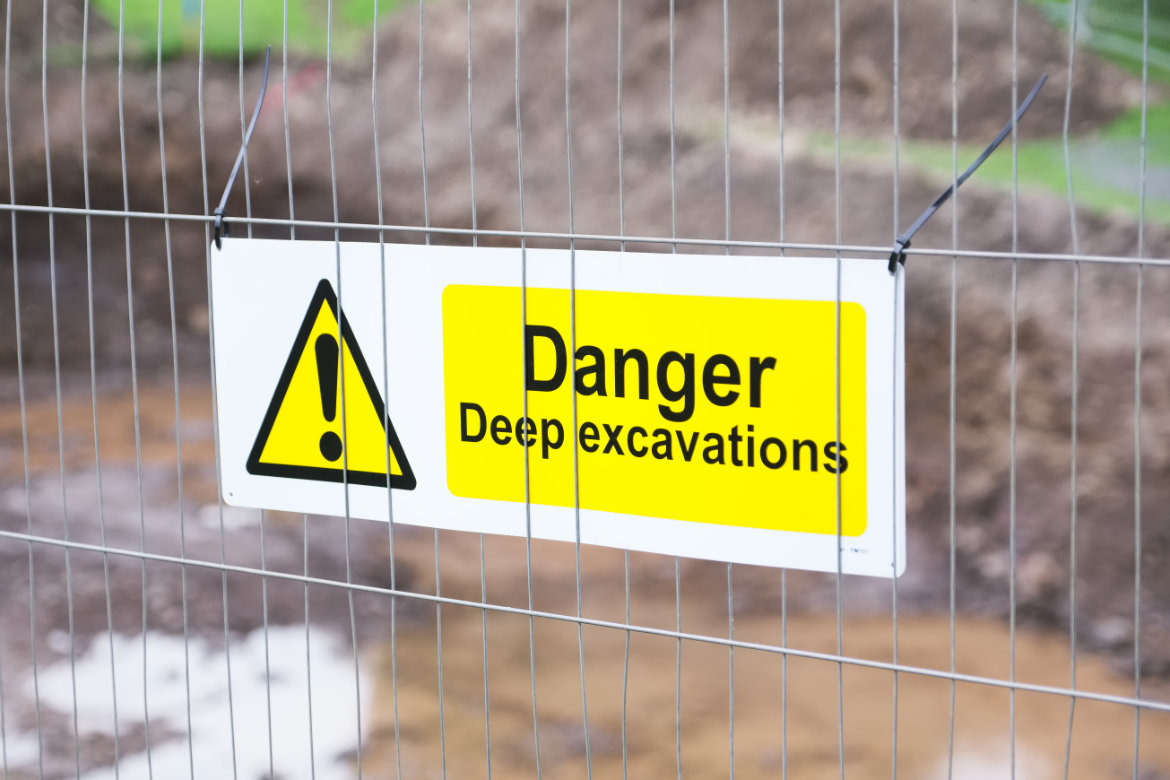
When you carry out a construction site inspection in winter, make sure you identify any hazards that could become hidden or hard to see in the winter weather, and install extra barriers and signage, or create a plan for keeping those areas clear.
Don't expect people to remember where hazards are - it's easy to become disorientated when thick rain or snow is blocking your view.
Monitor the weather
Keep an eye on the weather. If the wind picks up or a storm comes in, it might not be safe to continue what you are doing.
Working outside in the winter isn't all bad. On a bright sunny winter's day, it can even be quite pleasant to carry out physical work while the cold air keeps you cool. But the winter weather can be a challenge, and surviving winter work outdoors means battling sleet, hail, snow, ice, fog, mist, rain, wind, and storms.

The law says you must provide protection from adverse weather.
Weather forecasts might not be 100% accurate, but checking the forecast can give you a good idea if bad weather is expected and allow you to plan for the day ahead.
The weather can have a big impact on construction safety:
- Strong winds might prevent you from being able to work at height.
- Heavy snow might hide site hazards.
- Rain could flood an excavation.
- Ice could make surfaces slippery and unsafe.
Consider the weather in your risk assessments, and decide what is, and isn't, safe to do in the current weather conditions.
Raise awareness in your team and help keep them safe on site with the winter working toolbox talk.


This article was written by Emma at HASpod. Emma has over 10 years experience in health and safety and BSc (Hons) Construction Management. She is NEBOSH qualified and Tech IOSH.
Need health and safety documents?
Search hundreds of health and safety documents ready to edit and download for your construction projects.
Find DocumentsRecent posts like this...

The Health And Safety Documents You Need In Construction (+5 Free Templates)
Do you have all the necessary documents for your construction sites? With so many health and safety requirements to cover, in this blog post, we look at the 11 types of essential health and safety documents you'll need to run a construction site.
Read Post
What Are Pinch Point Hazards? 6 Examples And How To Spot Them
Pinch point hazards are common in many workplaces, and especially in construction and manufacturing. A pinch might not sound too severe, but pinch points can cause life-changing injuries, and in the worst cases, they can be fatal. But what is a pinch point? And how can you spot these hazards?
Read Post
24 Free Construction Safety Posters For Your Building Sites
Need to remind workers to sign in, lock up, or wear their PPE? These 24 free construction safety posters can be downloaded, printed, and displayed on your site to help your team stay safe throughout your project.
Read Post